

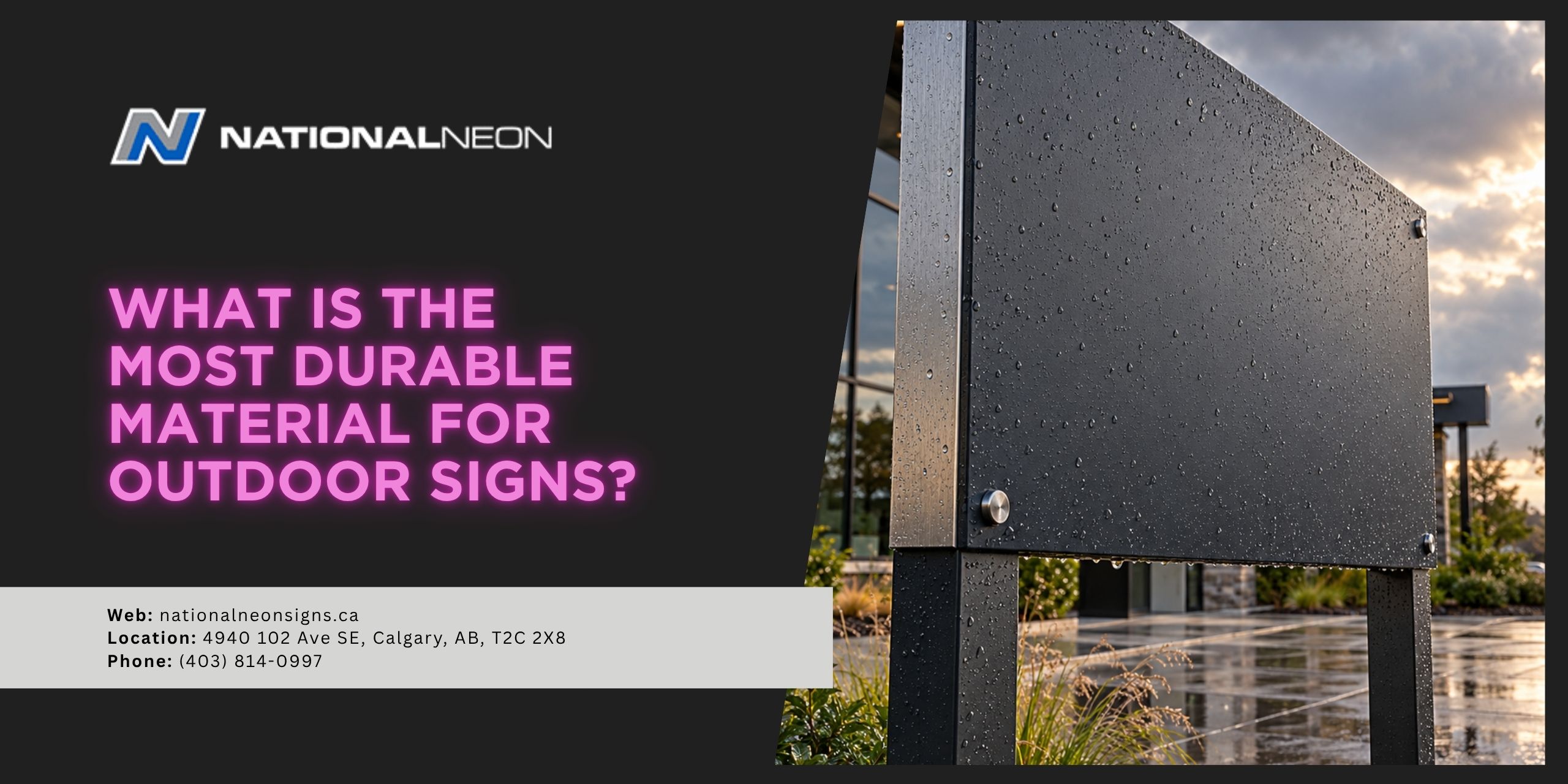
An outdoor sign has to do more than just look good. It has to withstand rain, wind, snow, sunlight, changing temperatures, and everyday wear. Choosing a durable material allows your sign to maintain its appearance and performance for many years to come.
But what is the most durable material for outdoor signs? Aluminum is often considered the most durable material for outdoor signage, but there are options. Other materials may be better suited to certain applications, budgets, and design requirements. Let’s discuss some of the most common materials used for outdoor signs and what makes each one a good choice.
What is the most durable material for outdoor signs?
Several materials are commonly used for outdoor signage, including aluminum, aluminum composite, PVC, and acrylic. While aluminum stands out for its durability, each material has its own advantages. Let’s take a look at each one:
Aluminum
Aluminum can withstand years of outdoor wear without rusting, warping or losing its shape, setting the standard for long-term signage. It withstands heavy use and harsh conditions better than most materials, which is perfect for signs that need to last a decade or more. Illuminated channel letters are an excellent example of aluminum signage, as aluminum is commonly used to form their sides and backs. Its strength and durability help maintain the letters’ shape while providing a reliable structure for lighting components, making it an ideal choice for eye-catching storefront signage that performs well over time.
Aluminum Composite Material (ACM)
Aluminum Composite Material (ACM) consists of two aluminum sheets surrounding a solid core, combining the strength of aluminum with a lightweight structure. It maintains its shape over time and resists wear, denting and surface damage that can shorten a sign’s lifespan. Storefront signage is an excellent application for ACM because its rigid, smooth panels provide a durable and professional surface for displaying business names, logos and branding. Its lightweight construction also makes installation easier, making it an ideal choice for large exterior signs that need to maintain their appearance over time.
PVC
PVC is more vulnerable to wear and is not designed for long-term outdoor use like aluminum and Aluminum Composite Material (ACM). Years of heat and direct sunlight can eventually soften or warp the material, affecting its appearance and structural stability. Non-illuminated letters and logos are a suitable application for PVC, as the material is lightweight, easy to shape and works well for indoor branding and short-term signage. It is a cost-effective option for signs that do not need to withstand years of harsh outdoor conditions.
Acrylic
Acrylic is a glossy plastic material that offers good resistance to sunlight and fading, helping signs maintain their vibrant appearance over time. However, compared to aluminum, ACM and PVC, it can be more vulnerable to physical damage such as cracking, scratching and impact. Cabinet signs (light box signs) are an excellent application for acrylic, as the material allows light to pass through, creating bright, attractive displays that enhance business visibility. This makes acrylic a great choice for businesses that prioritize a polished, professional appearance and eye-catching illumination over maximum physical durability.
What is the difference between aluminum and aluminum composite?
Aluminum signs are made from solid aluminum sheets, providing a strong and durable option for outdoor signage. Their strength makes them a reliable choice for long-term outdoor use.
Aluminum composite material, on the other hand, is made by bonding two thin sheets of aluminum to a lightweight polyethylene core. This construction creates a rigid, lightweight panel that offers many of the benefits of aluminum while using less material.
Which is better? When it comes to pure durability, solid aluminum may have a slight advantage. However, ACM is arguably one of the best all-around materials for outdoor signage. It combines durability and weather resistance with a lightweight, rigid construction, making it versatile enough for a wide range of applications. Its smooth, flat surface also provides a professional appearance and can easily be fabricated into different sign designs.
Ultimately, the best choice depends on the specific type of sign and the qualities that matter most for the project. Both aluminum and ACM can provide durable, long-lasting performance outdoors.
How long do outdoor signs last?
The lifespan of an outdoor sign can vary depending on the material, construction, weather exposure, and maintenance. Aluminum is one of the longest-lasting options and, when properly installed and maintained, can provide 10 to 15 years or more of reliable outdoor service. ACM and acrylic signs can also provide up to 10 years or more of outdoor use, although acrylic is more susceptible to impact damage such as cracking or scratching. PVC generally has a shorter outdoor lifespan, particularly when exposed to prolonged sunlight and extreme temperatures, and may last around 3 to 5 years or more.
Choosing the right material for your outdoor sign can help it look great and perform well for years to come. Contact us today at National Neon Signs to get started.
