How Can Signs Be Illuminated
Business Signage, Digital Signage, LED Signs, Neon Signs, Sign Profile

How Can Signs Be Illuminated?

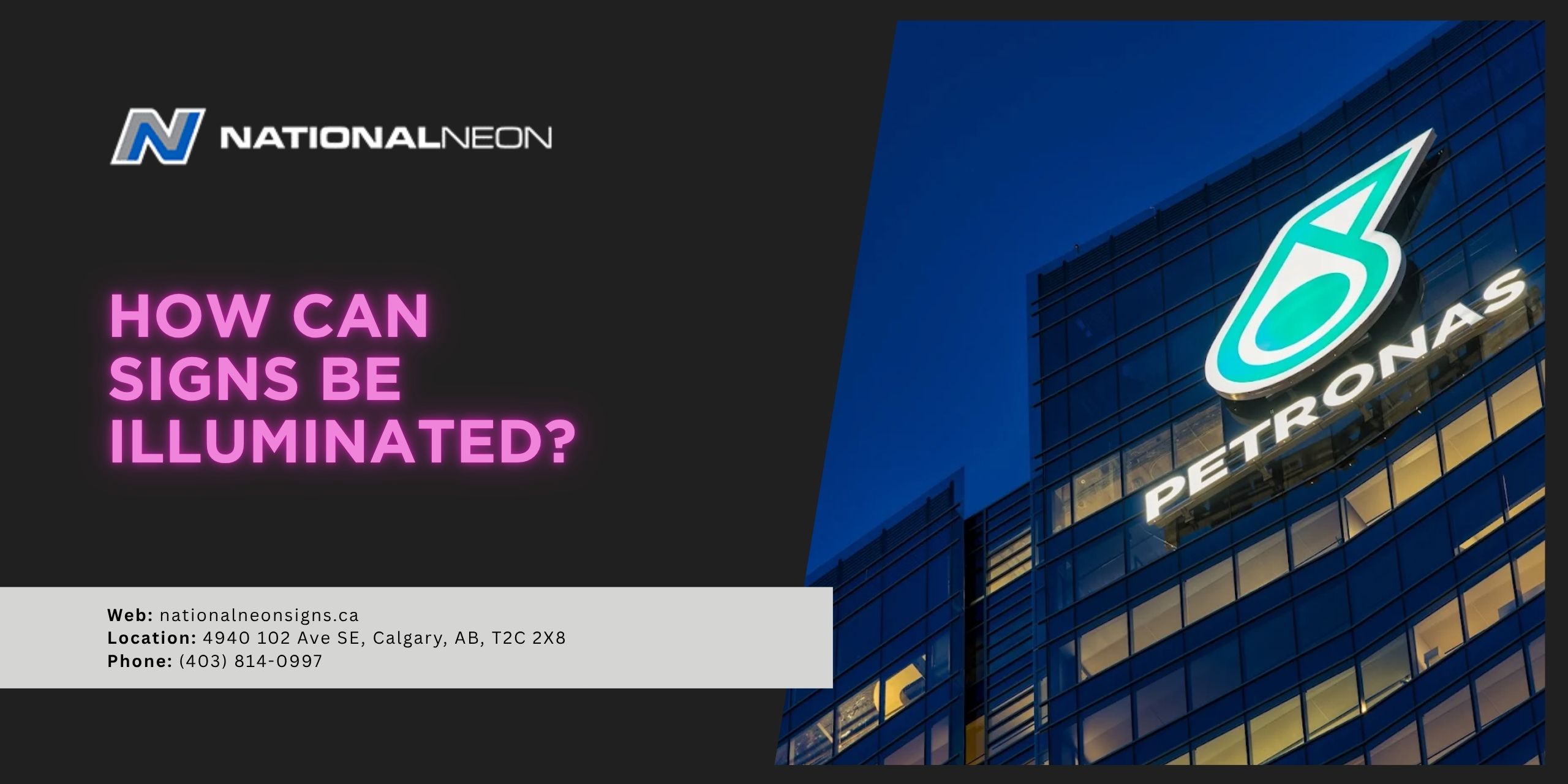
Your business sign has a big job to do. It needs to attract attention, help customers find your location, and reinforce your brand identity at the same time. One of the best ways to improve your sign’s visibility and make a stronger first impression is to illuminate it. Illuminated signage helps your business stand out and ensures your sign is easy to see and read, even after dark! 

But how exactly can signs be illuminated? There are several methods available, each offering different styles and benefits. In this article, we’ll look at some of the most common ways you can illuminate your sign.

What is illuminated signage?

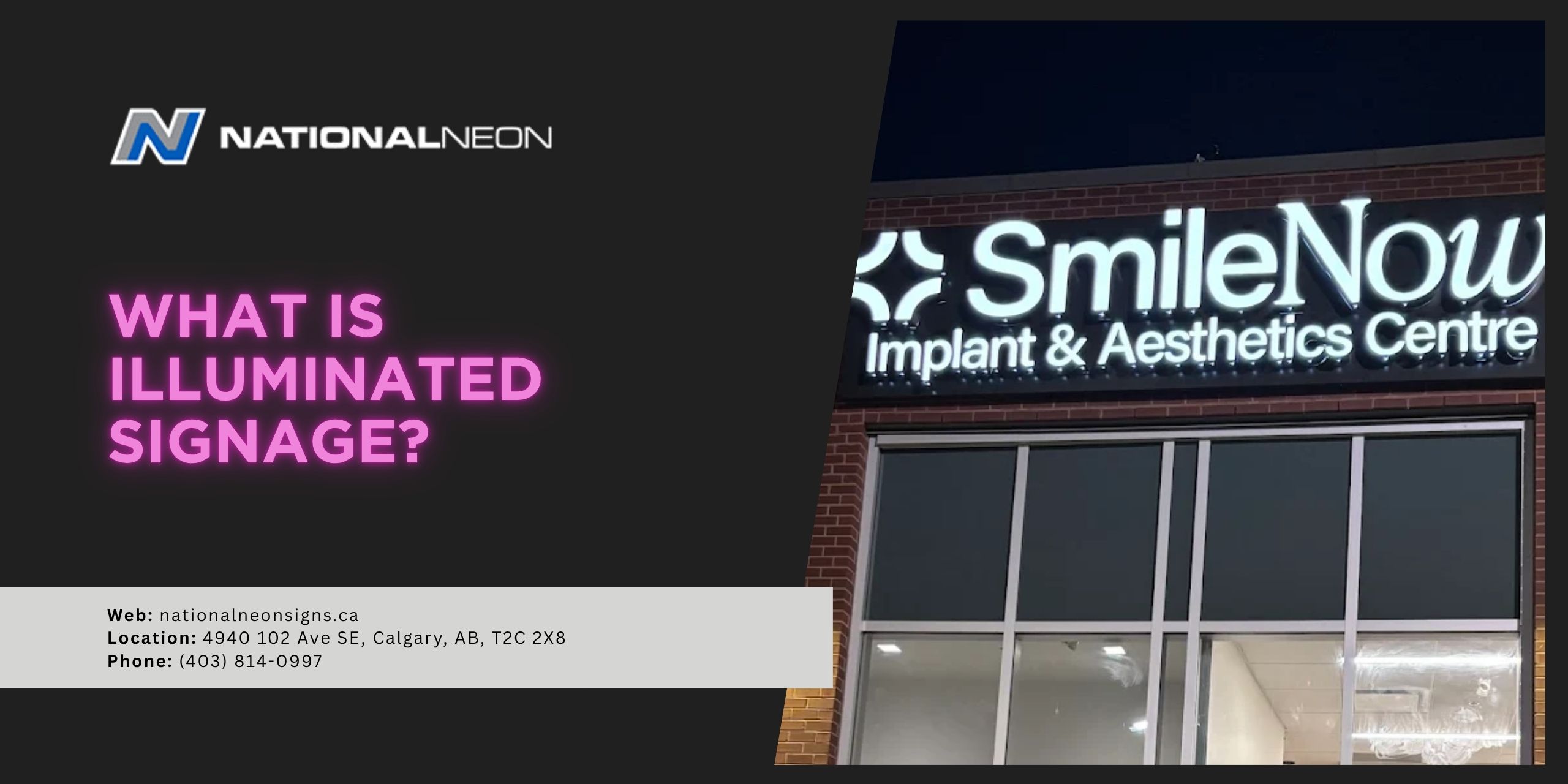
Illuminated signage is any sign that uses lighting to improve its visibility and readability. Visible around the clock, illuminated signs are considered one of the best effective forms of long-term advertising, and are used by businesses of all sizes.


How can signs be illuminated?

Signs can be illuminated in several different ways, depending on the desired look, brightness, and functionality. They can be lit using internal light sources like LEDs or neon, or via external lighting like spotlights or floodlights. 


Internal Illumination

These are some of the most common types of internal illumination, where the light source is built directly into the sign itself:


1. LED Illumination

 LED (light-emitting diode) lighting is the most popular choice for modern illuminated signage. LEDs are energy-efficient, long-lasting, and versatile, making them suitable for many different styles and applications, including:


  • Channel Letter Signs: LEDs are commonly used in channel letter signs, where individual, three-dimensional letters are illuminated for a bold, professional appearance. These signs can be front-lit, back-lit (halo-lit), or both, depending on the desired effect.
  • Light Boxes: Light boxes, also known as cabinet signs, use LEDs inside the sign structure to illuminate the face from within. The result is a bright, glowing display that is highly visible both day and night.
  • Halo-Lit Signs: Halo-lit signage is a style where light is projected from behind the sign to create a soft glow or “halo” effect around the letters or design. Imost commonly used in channel letters, though it’s not limited to them. This lighting technique can also be applied to dimensional logos, brand panels, or other custom shapes for a modern, high-end appearance. 
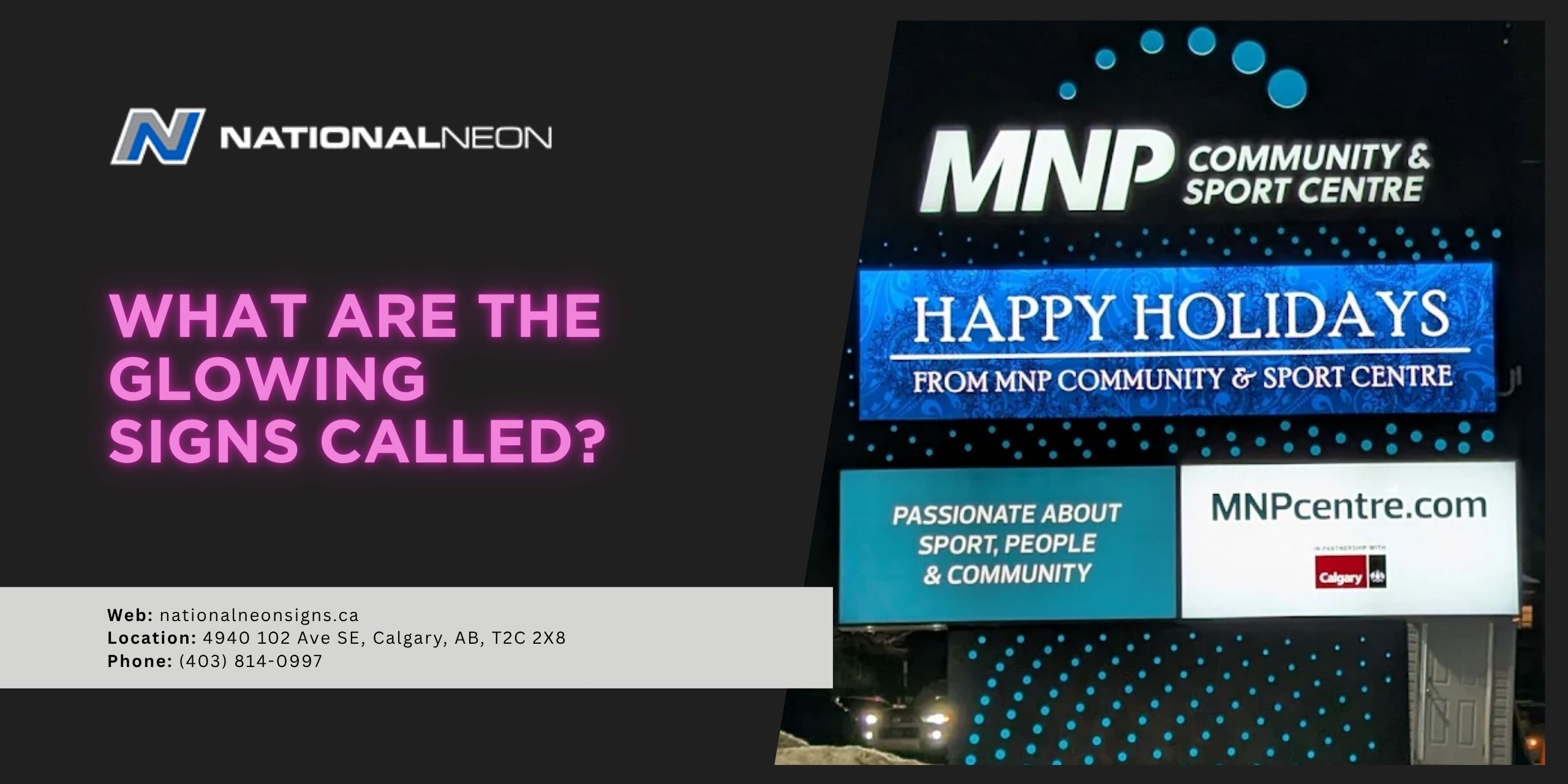
  • Digital Displays: Digital signage is a modern extension of LED illumination that uses LED screens to create dynamic displays. Instead of static signs, businesses can update their messages or rotate content in real time.


2. Neon Illumination

Neon signs have been used for decades and remain popular for their warm glow and nostalgic appeal. Traditional neon signs use glass tubes filled with gas that light up when electricity passes through them. Neon signs are often used by businesses such as:


  • Bars and pubs
  • Diners
  • Entertainment venues
  • Vintage-style businesses


While authentic neon signs are still available, many businesses now choose LED neon alternatives, which offer a similar visual effect while using less energy and requiring less maintenance. 


External Illumination 

In addition to internal lighting, signs can be illuminated externally using fixtures that direct light onto the face of the sign, such as:


1. Spotlight Illumination 

A spotlight produces a narrow, focused beam of light that is directed at a specific point. It might be used to highlight a particular sign, logo, or feature where you want concentrated illumination.


2. Floodlight Illumination 

A floodlight, on the other hand, produces a wide, broad beam of light that spreads over a larger area than a spotlight. It might be used to illuminate a bigger surface like a monument sign, building facade, or large outdoor signage. 


3. Gooseneck Lighting

A gooseneck light is a more decorative type of external lighting, with a long, curved arm shaped like a goose’s neck, hence the name. It is typically mounted above a sign and casts a soft light downward onto the sign face.


Do illuminated signs require a permit?

In most cases, yes, illuminated signs require a permit before installation. Because they involve electrical components and are mounted onto public-facing spaces, they are typically regulated by local municipal bylaws and building codes. Requirements can vary depending on the location and type of sign, so it’s important to check with your local municipality or work with a professional sign company to ensure all permits are properly obtained before installing your illuminated sign. 

There are many ways signs can be illuminated, and each method offers unique visual and functional benefits. If you’d like more information on choosing the right sign for your business, contact us today at National Neon to get started!

Read More
Illuminated Signage | What is Illuminated Signage? | What is Illuminated Signage in Canada?
Business Signage, Digital Signage, LED Signs, Neon Signs

What is Illuminated Signage?

In today’s competitive market, visibility matters more than ever. We live in a world with endless signs, advertisements, and other visual distractions, which are all competing for our interest, and one of the most effective ways for companies to attract attention is through illuminated signage. From glowing storefront logos to dynamic digital displays, illuminated signs help businesses stand out day and night.

But what exactly is illuminated signage, and why is it such an essential marketing tool? Keep reading to find out.

What is illuminated signage?

Illuminated signage refers to any type of sign that uses built-in lighting to improve visibility. These signs can be lit in several ways, including internal lighting, backlighting, edge lighting, or digital displays. Most modern illuminated signs use LED technology due to its high energy efficiency and durability. 

Illuminated signage combines design and lighting to create eye-catching displays that help businesses communicate more effectively with their customers. They are commonly used by restaurants, retail stores, entertainment venues, hotels, or office buildings. Because illuminated signs remain visible around the clock, they are often considered one of the most effective forms of ongoing business advertising. 


What are some common types of illuminated signage?

Illuminated signage comes in a wide range of styles, each designed to serve different branding and advertising needs. Some common types include:


  • Channel Letter Signs: These signs feature individually crafted three-dimensional letters that are internally lit. Businesses can choose from front-lit, back-lit, or combination-lit channel letters, depending on the look they want to achieve. 
  • Cabinet Signs: Illuminated cabinet signs, sometimes called box signs, contain internal lighting behind a translucent panel. The entire face of the sign lights up, making it easy to see both day and night.
  • Digital Signs: Digital LED displays allow businesses to update their messages instantly or rotate between different promotions and announcements. Some digital screens include interactive features like QR codes or touchscreen capabilities. These features are designed to engage customers and leave a lasting impression.
  • Neon Signs: Traditional neon signs are made using handcrafted glass tubes filled with gases such as neon or argon, which produce a bright, glowing effect when electrified. Because of their vibrant colours and nostalgic appeal, neon signs have experienced a major resurgence in popularity, particularly among businesses looking to create a retro atmosphere. Today, many modern neon-style signs are created using flexible LED tubing to create the classic neon look. However, authentic neon signs do exist and remain valued for their distinctive craftsmanship.
  • Monument Signs: Many commercial properties use illuminated, freestanding signs near entrances to enhance visibility from the road, especially at night.


What are the benefits of illuminated signage?

Illuminated signs provide several advantages for businesses of all sizes, including:


  • Increased Visibility: One of the biggest benefits of illuminated signage is improved visibility. Lighted signs are easier to see during nighttime hours or poor weather conditions, helping businesses remain noticeable 24/7.
  • Stronger Brand Recognition: A bright, professionally designed illuminated sign naturally attracts attention, helping customers notice and remember a company’s name, logo, colours, and overall branding. 
  • Professional Appearance: A high-quality illuminated sign helps create a polished, professional appearance and can elevate the overall appearance of a business property. Many companies use illuminated signs to create a more modern, welcoming look that builds customer confidence.
  • Customization: Illuminated signs are available in a wide variety of styles, colours, materials, and different lighting effects, so businesses can customize their signage to match their branding.
  • Energy Efficiency: LED signage is highly energy efficient and durable, reducing both operating and maintenance costs.

Do I have to illuminate my sign?

No, you don’t have to illuminate your sign, and whether or not your sign needs lighting might depend on business hours, location visibility, branding goals, or local regulations. Non-illuminated signs remain popular for many businesses, particularly those looking for a simple, cost-effective option. While these signs can still be highly effective, they do have certain drawbacks, particularly their limited visibility after dark. 

Illuminated signage is more than just a way to display your business name – it’s a powerful tool to help attract attention and create a lasting impression both day and night. For more information, contact us today at National Neon!

Read More
What Are the Glowing Signs Called | Glowing Signs for Businesses
Business Signage, Digital Signage, LED Signs, Storefront Signage

What Are the Glowing Signs Called?

If you’ve ever driven past a business area at night, you’ve probably noticed a bright, glowing sign on every storefront. These signs are more than just decoration. They’re a powerful marketing tool designed to help businesses stand out, attract attention, and stay visible long after the sun goes down. But what are these glowing signs actually called?

The short answer is illuminated signage. However, there are several different types of glowing signs, each offering its own unique style and purpose. 

In this guide, we’ll break down some of the most common types of illuminated signs and the key characteristics of each one.

What is illuminated signage?

Illuminated signage refers to any sign that uses lighting to enhance its visibility, especially during nighttime hours or in low-light conditions. These signs can be lit internally, externally, or from behind, depending on the desired effect. Most modern illuminated signs use LED lighting because of its high energy efficiency and long lifespan. 

You might hear illuminated signage casually called “glowing signs” because of their bright, glowing appearance, particularly after dark. They are commonly used for:

  • Retail storefronts
  • Restaurants and cafes
  • Hotels
  • Entertainment venues
  • Gas stations and convenience stores
  • Shopping centres
  • Medical clinics and pharmacies
  • Office buildings

What are some common types of glowing signs?

Glowing signs come in several different styles, each designed to improve visibility and strengthen brand recognition. Some common types of illuminated signs include:

Channel Letter Signs

Channel letters are individually crafted, three-dimensional letters that are mounted directly onto a building. Each letter is internally illuminated, usually with LED lighting. Businesses can choose from front-lit, back-lit, combination-lit, or open-face letters. These glowing signs offer a clean, professional appearance and are a popular choice amongst a wide variety of businesses.

Cabinet Signs

An illuminated cabinet sign, sometimes called a box sign, is a sign with an internal lighting system housed within a cabinet-shaped frame. The face of the sign is typically made from translucent acrylic so the light can shine through, creating a bright, glowing display. Cabinet signs are popular because they’re highly visible both day and night, and relatively cost-effective for larger signage.

Pylon Signs

Illuminated pylon signs are tall, freestanding signs that are typically mounted on one or two poles and positioned near roads, highways, or entrances to commercial properties. These large signs are designed to be highly visible from a distance, making them well-suited for attracting passing traffic along busy roadways.

Monument Signs

Glowing monument signs are freestanding signs, similar to pylon signs, but are shorter and closer to the ground. They are often placed near the entrance of a business, and built on a solid base, which gives the property a more refined, polished appearance.

Neon Signs

When you picture a classic, glowing sign, a neon sign might be the first thing that comes to mind. Traditional neon signs are made from hand-bent glass tubes filled with gas that lights up when electricity passes through them, giving them their warm, distinct glow. Today, many modern “neon” signs are actually created using flexible LED tubing designed to mimic the same iconic look. These LED versions offer the aesthetic appeal of traditional neon while being more energy-efficient, durable, and easier to maintain. That said, authentic glass neon signs still exist and continue to be used, especially in custom art pieces and specialty businesses.

LED Digital Displays

LED digital displays are modern illuminated signs that use high-resolution LED screens to show dynamic content such as text, images, or animations. Unlike static signs, these glowing displays can be updated quickly and remotely, allowing businesses to change messages or promotions in real time. 

What’s the difference between illuminated and non-illuminated signage?

The main difference between illuminated and non-illuminated signage comes down to visibility. Since illuminated signs use built-in lighting, they remain bright and readable, even at night or in poor weather conditions. These are what we would commonly refer to as “glowing signs”, because of the way they stand out with a bright, noticeable presence after dark.

Non-illuminated signs, on the other hand, do not light up themselves and rely entirely on external light sources (like sunlight) to be seen clearly. While they are still widely used and can be a cost-effective option for many businesses, the main limitation of a non-illuminated sign is its reduced visibility, especially after dark.

Ready to make your business stand out with a glowing sign? Contact us today at National Neon to get started!

Read More
What signs need to be illuminated
Business Signage, Digital Signage

What Signs Need to Be Illuminated?

An illuminated sign does more than simply glow at night. It improves readability, reinforces branding, enhances safety, and helps businesses stand out in competitive environments. Your sign plays an important role in helping people find information quickly and easily, and when a sign is illuminated, it remains visible no matter the time of day.

But what signs need to be illuminated? In some cases, illumination is legally required, particularly for safety and emergency signage. For most business storefront signage, it is a practical investment that improves customer experience. 

In this guide, we’ll look at which signs actually need to be illuminated, as well as the types of signs that simply benefit from better visibility after dark. 

What is illuminated signage?

Illuminated signage refers to any type of sign that uses lighting to improve its visibility. Signs can be illuminated internally, usually with LED lighting built into the sign itself, or externally using spotlights or floodlights. 

Some common types of illuminated signage include:

What signs need to be illuminated?

Many types of signs benefit from illumination, especially those that need to remain visible in low-light conditions. While some illuminated signs are required by law, others are used to improve overall nighttime readability.

Let’s take a closer look:

Safety and Emergency Signs

The signs that are most commonly legally required to be illuminated are safety and emergency-related signs, especially in commercial or public buildings. These might include:

  • Exit signs
  • Emergency exit route signs
  • Stairwell markers
  • Fire safety signage
  • Parking garage directional signs
  • Certain wayfinding signs
  • Hazard and caution signs

Pylon and Roadside Signs

For regular business signage, illumination is usually not legally required. Still, local bylaws or zoning regulations may require signs to meet certain standards for clarity and readability, especially roadside signs for businesses operating at night. More commonly, businesses choose to illuminate pylon signs and roadside signs for visibility and traffic exposure rather than because of a strict legal requirement. Without lighting, these signs become difficult to read after sunset, especially from a distance. 

Businesses that often use roadside signs include:

  • Gas stations
  • Hotels and motels
  • Shopping plazas
  • Fast food restaurants

Business Storefront Signs

Storefront signs are one of the most common types of signs that benefit from illumination. These signs, placed above or near an entrance, play a key role in identifying the business and attracting attention from pedestrians and passing traffic. While not usually legally required, illumination is a practical choice, especially for businesses that operate into the evening or after dark. 

Illuminated storefront signs are commonly used by:

  • Retail stores
  • Restaurants and cafes
  • Office buildings
  • Salons and spas
  • Grocery stores 
  • Entertainment venues
  • Service-based businesses

What signs don’t need to be illuminated?

Not all signs need illumination, especially if they’re used in low-traffic or well-lit environments. 

Some examples of non-illuminated signs might include:

  • Temporary signage (such as event signage or seasonal promotions)
  • Yard signs or real estate signs (such as “for sale” signs)
  • Construction signs (used only during daytime hours)
  • Interior signs in lit buildings (such as indoor office or store signs)
  • Residential address plaques

Some businesses choose not to illuminate their signs due to cost, maintenance, or design preferences. In many cases, using bold contrast, simple layouts, reflective materials, or external ambient lighting is enough to keep the sign readable and effective without built-in illumination. 

Do I need a permit for an illuminated sign?

Yes, in most cases, illuminated signs require a permit before installation, and whether or not your sign can be illuminated will depend on local bylaws and building codes. Some municipalities require illuminated signs for certain commercial properties, while others restrict brightness levels or operation hours. These requirements can vary depending on your location and the type of sign. Before installing illuminated signage, businesses should confirm permit requirements and zoning rules with their local municipality.

For more information on illuminated signs for your business, contact us today at National Neon!

Read More
How to Make Signs Pop | Make signs pop
Digital Signage, LED Signs, Neon Signs

How to Make Signs Pop?

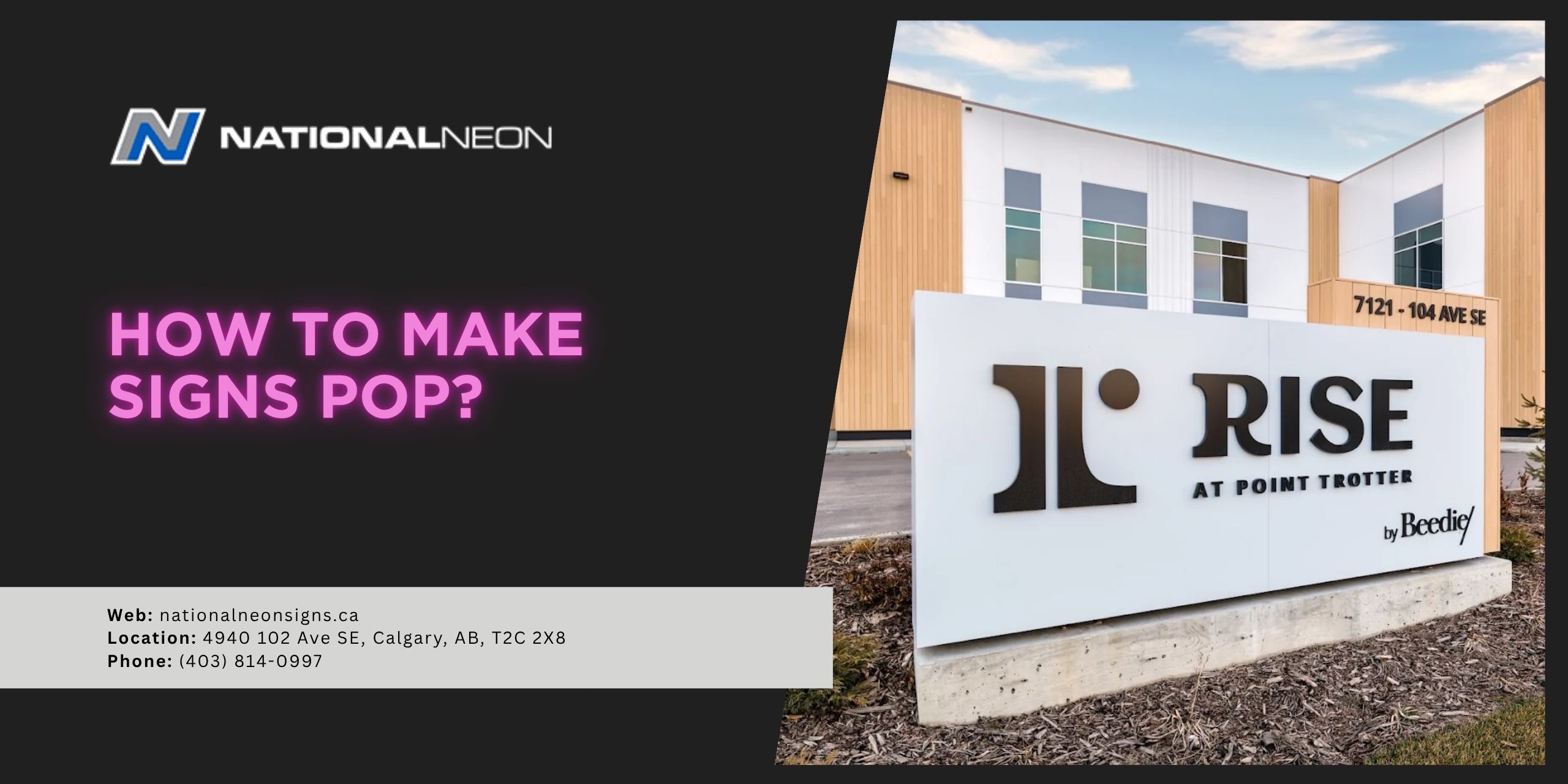
Signs aren’t just pretty decorations – they are powerful communication tools meant to grab viewers’ attention and convey your message instantly. But with so many competing signs, how do you make yours stand out? 


Designing a great sign might seem straightforward, but creating one that truly pops requires some strategy. In this guide, we’ll break down these simple techniques to make sure your sign gets noticed.

How to make signs pop?

Successful signage starts by combining clear messaging with high contrast and visual hierarchy. Bold, readable fonts and complementary colours draw attention, while simple layouts make the message easy to read and understand.


Let’s take a closer look:


1. Clear Messaging


Every great sign starts with a strong concept. Before even thinking about the design, take a step back and ask yourself: What is the purpose of this sign? A typical storefront sign usually means displaying your business name and giving your customers a quick sense of your brand and what you have to offer. Clarity is key. Most people only glance at a sign for a brief moment, so your message needs to be easy to read and understand. Focus on the most important information and cut anything unnecessary. 


2. High Contrast Colours


Contrast is one of the simplest ways to make your sign pop. Using a strong contrast between the background and lettering ensures your sign is both readable and highly visible. For example, use:


  • A dark colour on a light background
  • A light colour on a dark background


Avoid colours that blend into each other that make your sign harder to read or overdoing it with too many harsh contrasts as it can look chaotic. Stick to complementary colour palettes and test your sign in different lighting conditions. 


3. Choose the Right Font and Size


The right font for your sign can carry a lot of personality and make your message more memorable for your customers. 


  • Bold, sans-serif fonts are a popular choice for storefront signs because they are clean and easy to read, even from a distance. 
  • Script or decorative fonts can work for certain businesses, but they must be used with caution. While they may look interesting, they can become hard to read if viewers have to pause to decipher the letters, which reduces the effectiveness of your sign. 


Also, letter size matters – make sure your letters are large enough to be easily read from the distance where your audience is likely to see them. A good rule of thumb for an outdoor sign is roughly 1 inch of letter height per 10 feet of viewing distance. 


4. Create a Visual Hierarchy


Visual hierarchy is how you guide the viewer’s eye to the most important parts of your sign first. In other words, not everything should compete for attention, and some elements should stand out more than others. Start with your sign’s main message, often your business name and make it the largest, boldest part of the sign. Supporting details, such as a tagline or store hours, should be smaller and less bold so they don’t distract from the primary message. 


In most cases, simple is better. Avoid cluttering your sign with too much text, too many colours, or unnecessary graphics, which can overwhelm the viewer and make it harder to focus on the most important information. 


How do I make a sign visible at night?

Your sign won’t pop if it disappears after dark or in cloudy conditions. Proper sign illumination ensures your business stays visible, day and night


Here are a few ways you can light your sign:


  • LED Lettering – Bright, efficient LEDs make letters pop.
  • Spotlights or Floodlights – Shine focused light onto your sign from above or below.
  • Illuminated Channel Letters – Individual 3D letters can be front or back-lit, adding depth and dimension to your sign.

How long should a sign’s message be?


When it comes to signage, brevity is key. Keep your message short – ideally, under seven words if possible. Remember, you only have a brief moment to capture the attention of your viewer and too much text or information can reduce the effectiveness of your sign. 


Ready to make your sign pop? Contact us today at National Neon Signs for more information.

Read More
What are Current Trends in Sign Design
Business Signage, Digital Signage

What are Current Trends in Sign Design?

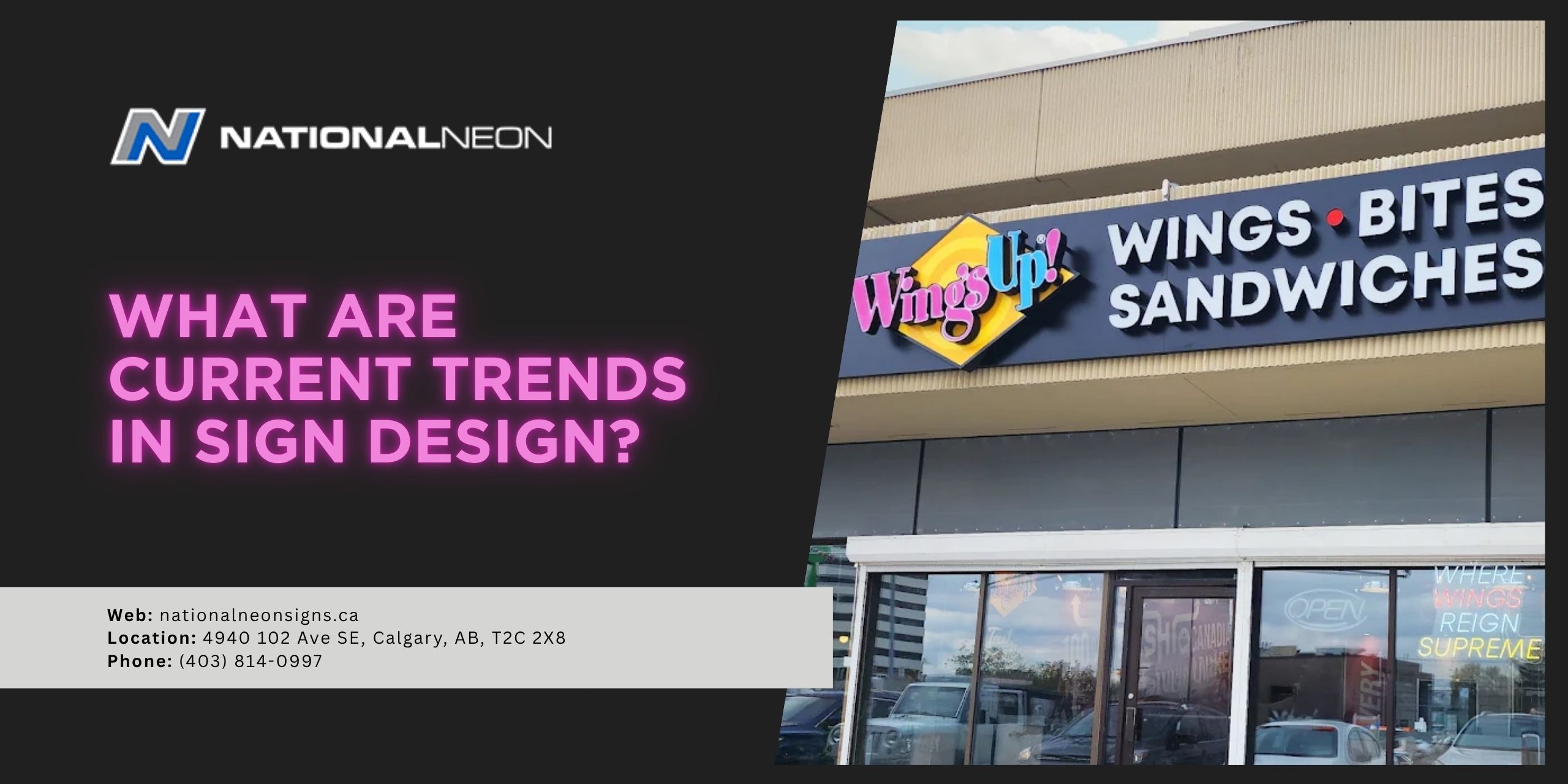
Like the rest of the world, trends in sign design continue to evolve, driven by technological advancements and shifting consumer expectations. In a landscape saturated with information, a great sign isn’t just about being seen, it’s about being remembered. 


So what are the current trends in sign design? Today’s modern signage combines a balance between innovation and simplicity. Right now, it’s all about blending clean, bold visuals with smart tech and personalized features. The result? Signage that captures attention and leaves a lasting impression.


Let’s break it down.

What are the current trends in sign design?

Current trends in sign design focus on bold, clean visuals, sustainable materials, and interactive features. The goal is to create signage that not just stands out, but truly connects with people. 


Let’s take a closer look:

1. Minimalist Design

Minimalism continues to be a dominant force in sign design especially for the storefront signage, with a growing emphasis on clarity and functionality over pure aesthetics. Key elements of minimalist design include:


  • Clean lines
  • Simple shapes
  • Limited colour palettes
  • Plenty of white space


The result is signage that feels intentional, helping viewers quickly absorb important information without distraction.


2. Bold Typography


Combining bold, distinctive fonts with vibrant colours ensures maximum visibility and lasting impact. Today, designers are experimenting with:


  • Oversized fonts
  • Handcrafted or “imperfect” lettering
  • Creative font pairings
  • High-contrast colours


Some brands are using prominent typography to replace imagery altogether. 


3. Sustainable Materials


Sustainability is no longer just a trend , it has become a standard for modern sign design. Businesses are increasingly choosing eco-friendly materials that reduce environmental impact while still looking polished and professional such as:


  • Recycled or reclaimed materials, like wood, metals, or plastics
  • Low-VOC paints and coatings
  • LED lighting
  • Biodegradable substrates


Using sustainable materials demonstrates social responsibility and appeals to environmentally conscious customers.


4. Interactive Digital Signage


Interactive and digital signage is changing the way brands communicate with their audiences. The goal is to turn passive viewers into active participants by providing real-time updates and creating memorable experiences. Key features include:


  • Touchscreens and kiosks
  • Motion-triggered animations
  • QR code integration
  • Augmented reality (AR) elements


Some smart interactive signs can even adapt to user behaviour, offering personalized content that makes each interaction feel unique for the consumer.


Are sustainable signs really worth the cost?


Yes, investing in sustainable signage can be more expensive upfront, but the benefits often outweigh the initial cost. A sustainable sign not only reduces your business’s environmental impact, but it also sends a strong message about your brand values, which resonates with many consumers.


Some advantages include:


  • Enhanced Brand Image: Shows your commitment to social responsibility
  • Long-Term Savings: Durable, high-quality materials often last longer and reduce replacement costs
  • Customer Appeal: Consumers increasingly prefer businesses that prioritize sustainability
  • PR Opportunities: Eco-friendly initiatives can be highlighted in marketing and community outreach


Ultimately, a sustainable sign is a long-term investment in both your brand and the environment. 

Is digital signage worth it for small businesses?


Yes, digital signage is no longer just another idea for big brands; small businesses are discovering that it can be a powerful tool to attract attention and engage customers. Even a single screen can make a noticeable impact when used strategically, allowing small businesses to communicate promotions and highlight products in real time.


Why a digital sign is worth considering:


  • Dynamic Content: Customize or update your sign content or message instantly to display current sales or important announcements
  • Cost-Effective: Minimizes the need to reprint flyers, posters, and static signage, reducing waste and saving money
  • Flexible and Scalable: Easy to add screens or adjust messaging as your business grows
  • Engages Customers: Bright, moving displays naturally draw attention and keep viewers interested


Fortunately, digital signs have become more affordable, making them attainable for small businesses in ways they weren’t even five to ten years ago. 


If you’re thinking about updating your current signage or starting something new, working with an experienced sign company can help bring these ideas to life in a way that reflects current trends while staying true to your brand and long-term goals. Contact us today at National Neon Signs for more information.

Read More
What Is the Difference Between Signage and Wayfinding
Digital Signage, Wayfinding Signage

What is the Difference Between Signage and Wayfinding?

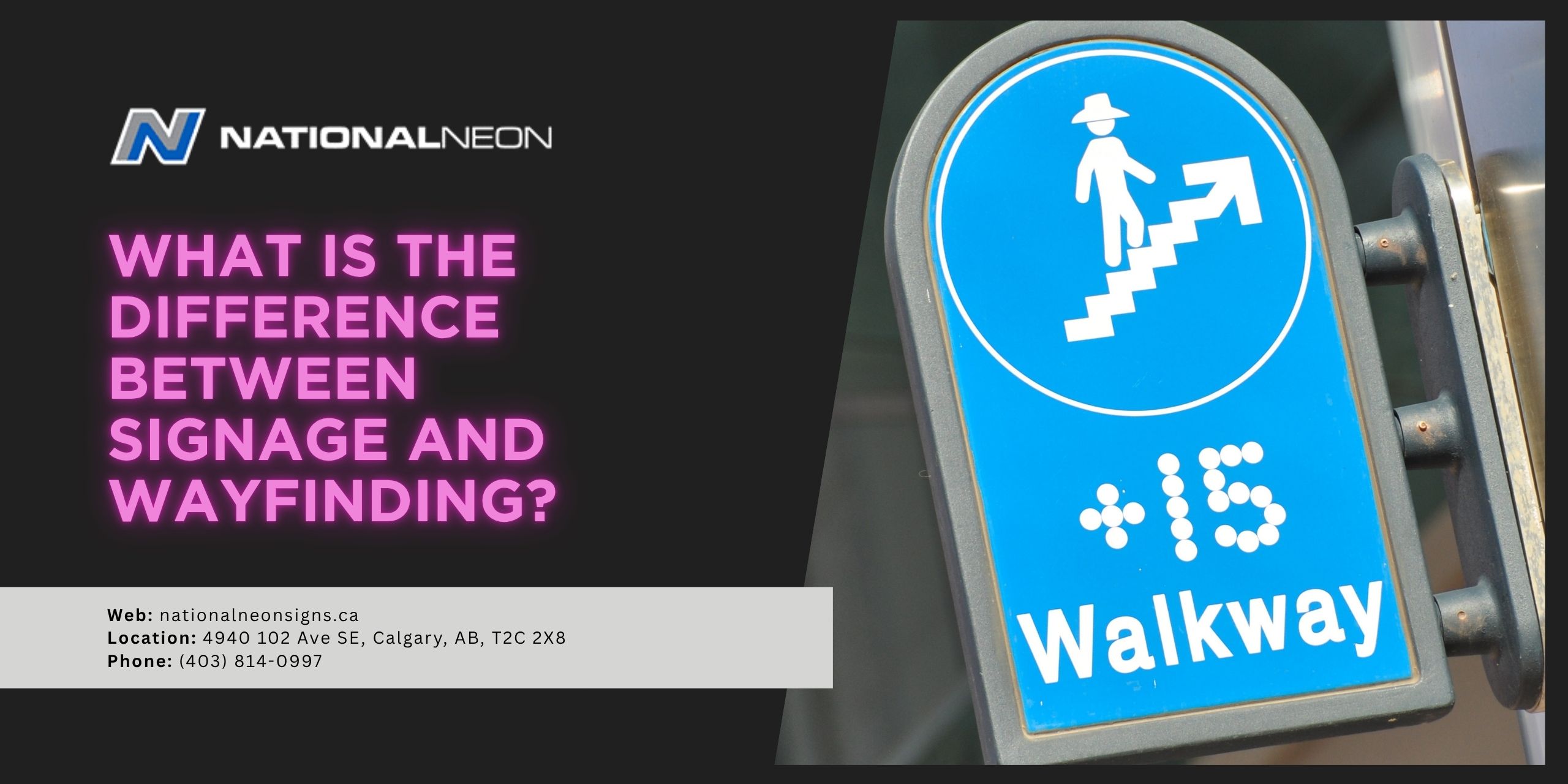
Signage and wayfinding are closely related subjects, but they aren’t the same thing. Signage refers to the actual physical signs that provide information (like arrows, room numbers, or business directories), while wayfinding sign is a broader term that refers to the overall process of orienting yourself within a space. 


Many people use these two terms interchangeably; however, there are a few key differences between signage and wayfinding. Understanding the distinction – and how they work together – can help businesses create an environment that is safer, more intuitive, and easier to navigate.

What is signage?

Signage refers to the tangible signs, symbols, and graphics used to communicate information. These signs are one of the primary tools within a larger wayfinding system.


There are four main types of wayfinding signage:

  • Identification Signs: Identification signs tell you where you are or confirm that you’ve reached your destination. Example: Room numbers, door plaques, washroom signs
  • Directional Signs: Directional signs guide you toward a destination, showing you where you want to go. Directional signs are often found at intersections or key decision points. Example: directional arrows, overhead signs, floor decals
  • Informational Signs: Informational signs are used to provide general information about a business or facility. Example: Hours of operation, a general building map, a list of available amenities
  • Regulatory Signs: Regulatory signs communicate rules, regulations, restrictions, or other important safety protocols. Example: “Do Not Enter”, “Authorized Personnel Only”, “No Smoking”


The primary goal of signage is to communicate information quickly and effectively. Together, the four types of wayfinding signage work to help guide visitors through an environment. 


Additional common signage types (often used alongside wayfinding)


Safety & Emergency Signs
These signs focus specifically on health, safety, and emergency procedures. While often grouped with regulatory signage, they are critical enough to stand on their own.


Digital Signage
Digital signage uses screens to display content that can be updated in real time. Digital signs may function as informational, directional, or promotional signage, depending on the content being shown.


Promotional / Branding Signs
These signs are designed to promote products, services, or brand identity, rather than guide movement.

What is wayfinding?

Wayfinding is the overall system, strategy, and experience of orienting oneself in a space and travelling from one place to another. Wayfinding signs use a series of environmental cues, combined with an individual’s cognitive ability, to create a mental model of an area.


Some key elements of wayfinding include:


  • Signage and Maps: Maps, arrows, room labels, directories, and universally recognizable symbols all help guide visitors through a space.
  • Contextual Clues: Distinctive features such as unique architectural cues, sculptures, or other prominent landmarks can serve as mental reference points to help users orient themselves, even when signage is limited.
  • Colour Coding or Zoning: Colour is a powerful tool for creating intuitive “zones” or routes.
  • Lighting: Lighting can highlight paths, mark key destinations, differentiate zones, improve visibility, or create memorable reference points. 
  • Windows or Outdoor Views: Seeing the outdoors can help people instinctively understand which direction they’re facing, what time of day it might be, or how the building relates to the outside world. Large windows might show distinctive features that can become reference points when navigating. 
  • Cognitive Mapping: This refers to the mental process of understanding and orienting yourself within a space. Wayfinding is not just about physical signs – it’s about human perception, memory, and spatial reasoning. People naturally form a mental map as they move through space. 


The primary goal of wayfinding is to reduce stress and confusion, enabling people to navigate complex areas efficiently. It is the overall experience of moving through a space, understanding it, and making decisions along the way.


What is the difference between signage and wayfinding?

Signage and wayfinding, both made by different signage company Calgary, are closely connected, but they are not the same thing. Signage refers to the physical signs themselves (static posters, plaques, digital screens, decals, arrows, or other graphics), whereas wayfinding refers to the overall system and experience of navigating through a space. 

Signage is just one tool in a much larger wayfinding system, which relies on many different elements to help people move through a space. 


Understanding the difference between signage and wayfinding can help business owners create a more positive experience for every visitor who walks through the door. For more information or to get started with sign creation, contact us today at National Neon.

Read More
outdoor digital signage
Digital Signage

Can Digital Signage Be Used Outdoors?

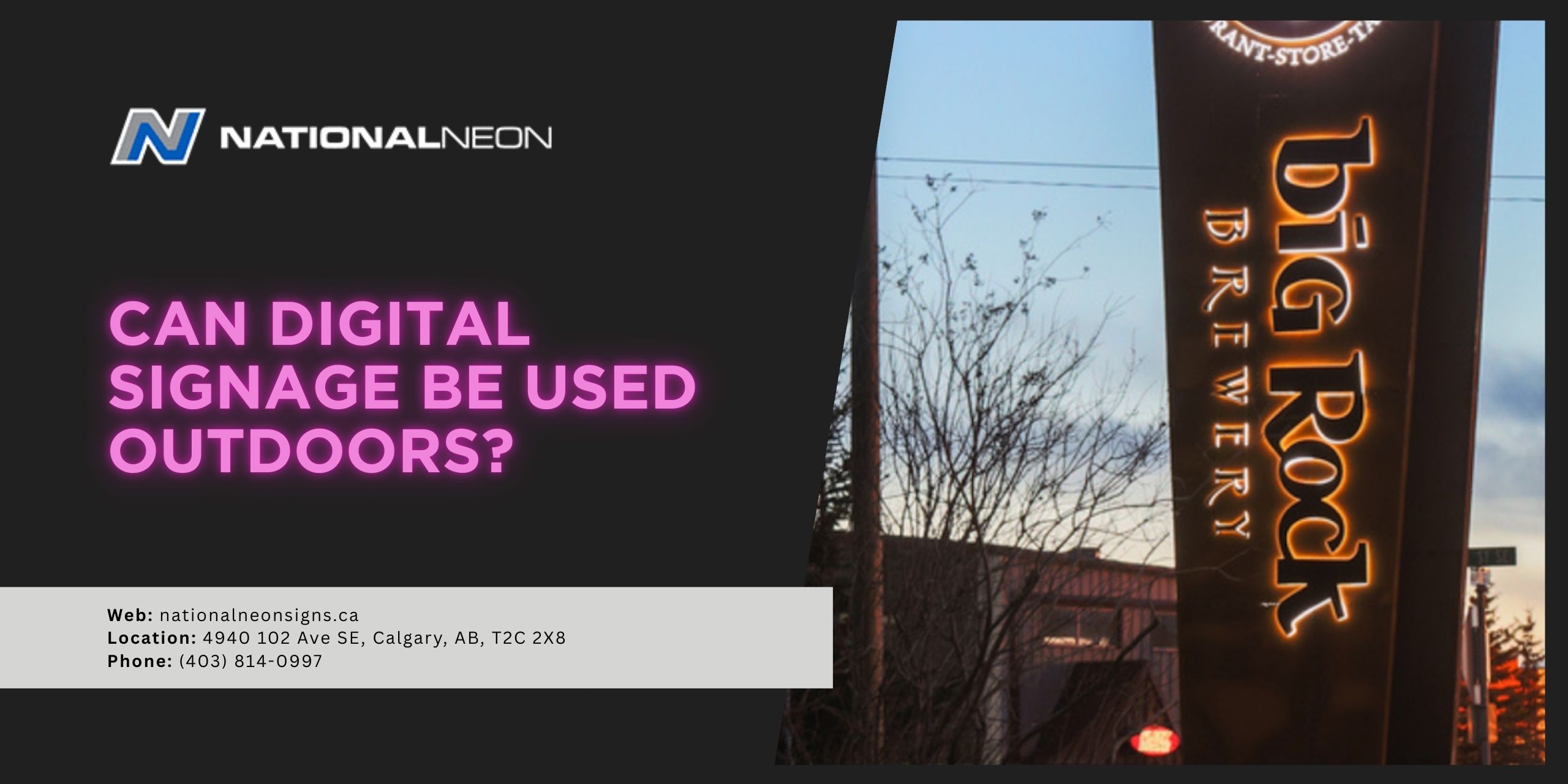
Digital signage is a powerful tool for businesses. Vibrant, dynamic displays attract more attention than static signs, creating a more engaging experience for your customers and ultimately leading to increased sales.


By placing digital signage outdoors, businesses can take advantage of high-traffic areas to increase their visibility and brand awareness. Most modern outdoor displays are durable and long-lasting, designed to withstand the elements. Investing in a high-quality outdoor digital sign by a trusted sign company in Calgary is crucial for long-term reliability and visual performance. In this post, we’ll examine some key considerations for outdoor digital signage. 

Can Digital Signage Be Used Outdoors?

Yes, digital signage can be used outdoors, but it requires specialized, weatherproof enclosures. These displays are designed to withstand rain, dust, direct sunlight, and extreme temperature fluctuations. Outdoor digital signage features high brightness for visibility, anti-glare technology, temperature-management systems, and durable, shatter-resistant enclosures to protect the display from harsh conditions and vandalism. 


Let’s take a closer look at the key features of outdoor digital signage:


  • Weatherproof Enclosures: Outdoor digital displays use a sealed, weatherproof enclosure with a high IP rating (IP65 or higher) to protect against dust, water, and other environmental elements.
  • High Brightness and Visibility: Outdoor screens are engineered with high-brightness technology (often over 2,500 nits) to ensure content is visible and legible, even in direct sunlight. Some smart displays automatically adjust their brightness based on ambient light conditions, optimizing visibility and energy efficiency.
  • Temperature Control: Outdoor digital signage requires built-in heating and cooling systems to prevent the screen from overheating or freezing, as this can damage the display. Ventilation fans, heaters, or air conditioning units allow the sign to operate at optimal temperatures and ensure year-round operation. 
  • Durability: digital signages last a long time as they are made with durable, UV-resistant materials, including shatter-resistant glass and protective coatings to safeguard the screens from physical damage and prolonged sun exposure.
  • Anti-Glare: Anti-glare technology ensures content is clear and readable, without reflections, which is essential for outdoor environments.
  • Security Features: Many outdoor displays utilize features like tamper-resistant hardware and security enclosures to deter vandalism and theft.
  • Professional Installation and Maintenance: Always have a professional install your outdoor digital display. Professionals know how to handle critical aspects of installation, ensuring safety and preventing damage. Routine inspections and maintenance will keep your display in top condition.

What Are the Benefits of Outdoor Digital Signage?


Virtually any business can benefit from an outdoor digital sign. Some benefits include:


  • Enhanced Visibility: Bright, high-resolution displays capture attention and stand out in busy outdoor environments.
  • Dynamic Content: Digital signs can display videos, animations, and other engaging content, which is more effective than traditional static signs.
  • Real-Time Updates: Businesses and organizations can quickly update their signage to deliver real-time messaging, including current promotions, announcements, or safety information. 
  • Brand Awareness: Outdoor digital signage provides powerful opportunities for businesses to enhance their brand visibility and reach customers effectively. 


When you choose National Neon Signs, you can benefit from one of the most powerful digital marketing tools on the market. Contact us to discuss whether outdoor digital signage is the right option for your business!

Read More
How Do You Update Content on Digital Signage?
Digital Signage

How Do You Update Content on Digital Signage?

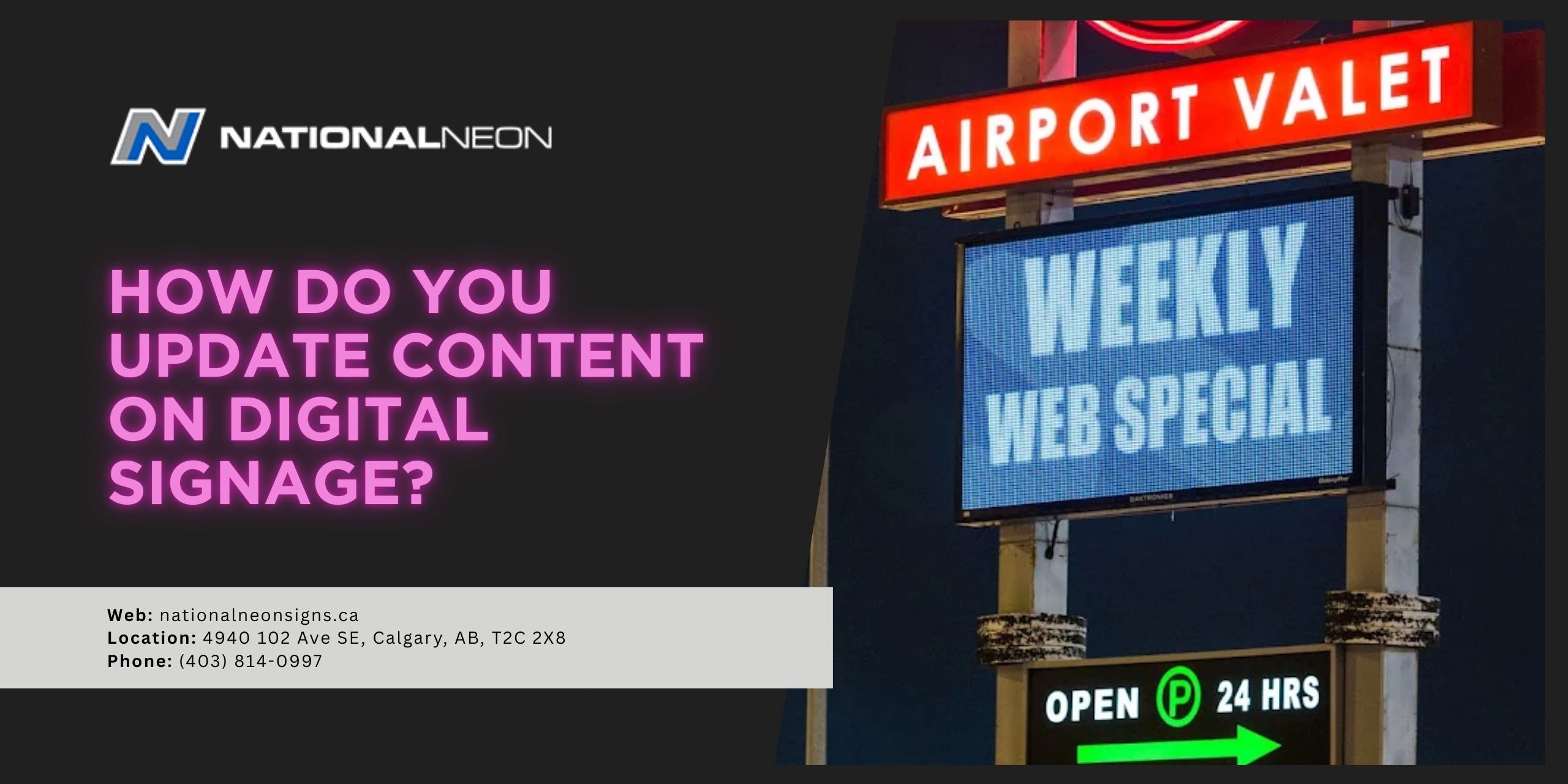
One of the biggest benefits of digital signage is the ability to update content, keeping your audience engaged with fresh, relevant information. Dynamic digital displays let businesses deliver messages in real time, perfect for current promotions, seasonal content, emergency notices, or other updates.


Learn what to update, how to deploy, and when to refresh. DIY works for small setups, but well-reputed Calgary sign makers are best for complex networks to maintain brand consistency, cut downtime, and prevent unexpected expenses.

How Do You Update Content on Digital Signage?

There are two main ways to update digital signage content: manually with a USB drive or remotely using a cloud-based content management system (CMS). Let’s examine each method in more detail:

Using a USB Drive

This method is ideal for standalone displays or small networks, but it requires a physical trip to each screen. It may not be practical for a large number of screens or for frequent, real-time changes.


 Here are the steps for using a USB drive:


  1. Load Content: Copy your media files from a computer to a USB flash drive.
  2. Connect to Screen: Insert the USB drive into the compatible display or digital signage player, which is often done via a USB port on the device.
  3. Select and Play: Navigate the on-screen menu or a connected remote to select the files you want to display.


Using a Cloud-Based Content Management System

A cloud-based CMS is the most powerful method for managing content across multiple digital displays.  It offers remote access, allowing for real-time updates, integration with other data sources (such as social media feeds), and scheduling content for different times of day or locations.  You can log in from any web-enabled device, create or modify content, and select which screens to update. 


 Here are the steps for utilizing a CMS system:


  1. Log in to the CMS: Access your CMS dashboard through a web browser to manage your signage network.
  2. Upload Content: Upload your new images, videos, or other media directly to the CMS library.  Many platforms also offer design tools and templates to create content directly within the system.
  3. Create and Organize Playlists: You can arrange your uploaded content into playlists, which are scheduled lineups of what will be shown on the screen.  This allows you to control the order and frequency of your messages.
  4. Schedule Updates: Set up schedules for your playlists to play at specific times, days, or for specific events.
  5. Publish: Publish the changes to send the updated content to one or more screens in your network.  The CMS will automatically push the update to your signage via an internet connection.


How Often Should I Update Content on Digital Signage?

You should update digital signage content regularly to keep it fresh and relevant. Ideal frequency depends on your audience, location, and content type. Some situations require daily updates, others weekly or seasonal updates. Many digital signage platforms allow you to schedule updates automatically, making it easier to manage frequent changes and ensure a consistent flow of new information.


Here are a few factors to consider:


  • Audience: Consider your audience’s demographics and behaviour. Content that resonates with a morning crowd may differ from what engages an evening audience.  
  • Location: A high-traffic location might necessitate more frequent updates to stay relevant and to keep content fresh and engaging.
  • Content Type: Time-sensitive information, like news, weather, or daily specials, requires daily (or more frequent) updates, while less time-sensitive content, like product features or company newsletters, may only require monthly updates. Some content can be refreshed weekly to avoid “banner blindness” and plan for seasonal promotions and events to stay relevant during holidays or specific times of the year.


Consistently updated content shows your business is active and attentive. By regularly changing your content, you can keep your audience engaged and improve the overall customer experience.

Virtually any business can benefit from digital signage. Find out how easy it is to manage your digital content from Canada’s premier sign company! For more information, contact us today at National Neon Signs.

Read More
digital signage profitability
Digital Signage

Is Digital Signage Profitable?

As technology continues to evolve, digital signage has emerged as a powerful tool connecting businesses with their customers. Traditional static signs are limited in the amount and type of content they can display, whereas dynamic digital signage creates engaging, interactive displays that capture audience attention. It can utilize high-resolution images, video, animation, and sound that are easily updated to deliver real-time messages or advertise seasonal promotions.


Due to the advanced features and technology involved, digital signage requires a higher initial investment than its static counterpart. So, is digital signage profitable? Despite higher upfront costs, digital signage is worth it and typically very cost-effective in the long run, with many businesses seeing a return on investment (ROI) within a year.


In this post, we’ll examine key benefits of digital signage that drive profitability.

Is Digital Signage Profitable?

Yes, digital signage made by a well-reputed signage company in Calgary is highly profitable, potentially providing a strong return on investment. Through more effective marketing, digital signage can increase sales and improve overall customer engagement.


Let’s take a look at the benefits of digital signage that drive profitability:


  • Increases Sales: Businesses using digital signage for promotions have reported up to a 33% increase in sales. Digital signage captures attention, displays targeted promotions, and is easily updated to reflect current offers and real-time content.
  • Boosts Customer Engagement: Dynamic and interactive digital displays are more engaging than traditional static signs. Visually rich content has a higher recall rate than text-only information, leading to better brand awareness and customer interaction. Digital signage allows for interaction through touchscreens or QR codes, which improves the customer experience and encourages people to spend more time in-store.
  • Reduces Long-Term Costs: Digital signage reduces recurring costs associated with traditional printing and distribution of flyers, brochures and other promotional materials. Easy, instant updates save time and labour, as staff don’t have to manually handle content, freeing them up for other higher-value tasks.
  • Creates New Revenue Streams: Businesses can sell ad space on their digital screens to other companies, turning their displays into an additional source of passive income.
  • Reduces Perceived Wait Times: Digital signage can reduce perceived wait times in lineups and queues, making the experience more pleasant and less frustrating for customers. Happier customers who feel like their time is valued are more likely to return and develop loyalty to a brand.

How Long for ROI with Digital Signage?

The time to see a return on investment for digital signage varies, but typically falls between 6 and 18 months. While some businesses may see this return even sooner, the exact timeframe depends on factors like industry, traffic levels, the ability to track key metrics, and content strategy. Generally, companies in high-traffic environments like retail, banking, or quick-service restaurants may see faster results through increased sales, foot traffic, and by communicating important information to a large audience.


Here are a few ways to improve your ROI:

  • Update Content Frequently: Use digital signage to display real-time messaging and promotions.  You should update digital signage content frequently, ideally two to three times a day, to keep it fresh and relevant.
  • Track Key Metrics:  Monitor key performance indicators (KPIs) such as sales, operational efficiency, and brand awareness.  
  • Integrate with Other Marketing Efforts: Ensure your signage is consistent with your social media feeds, e-mail campaigns, and other marketing efforts.
  • Focus on Both Revenue and Cost Savings: Remember that ROI comes from both increasing revenue and reducing operational costs (eg, from eliminating printing jobs).


Virtually any business can benefit from digital signage.  For more information, contact us today at National Neon

Read More