

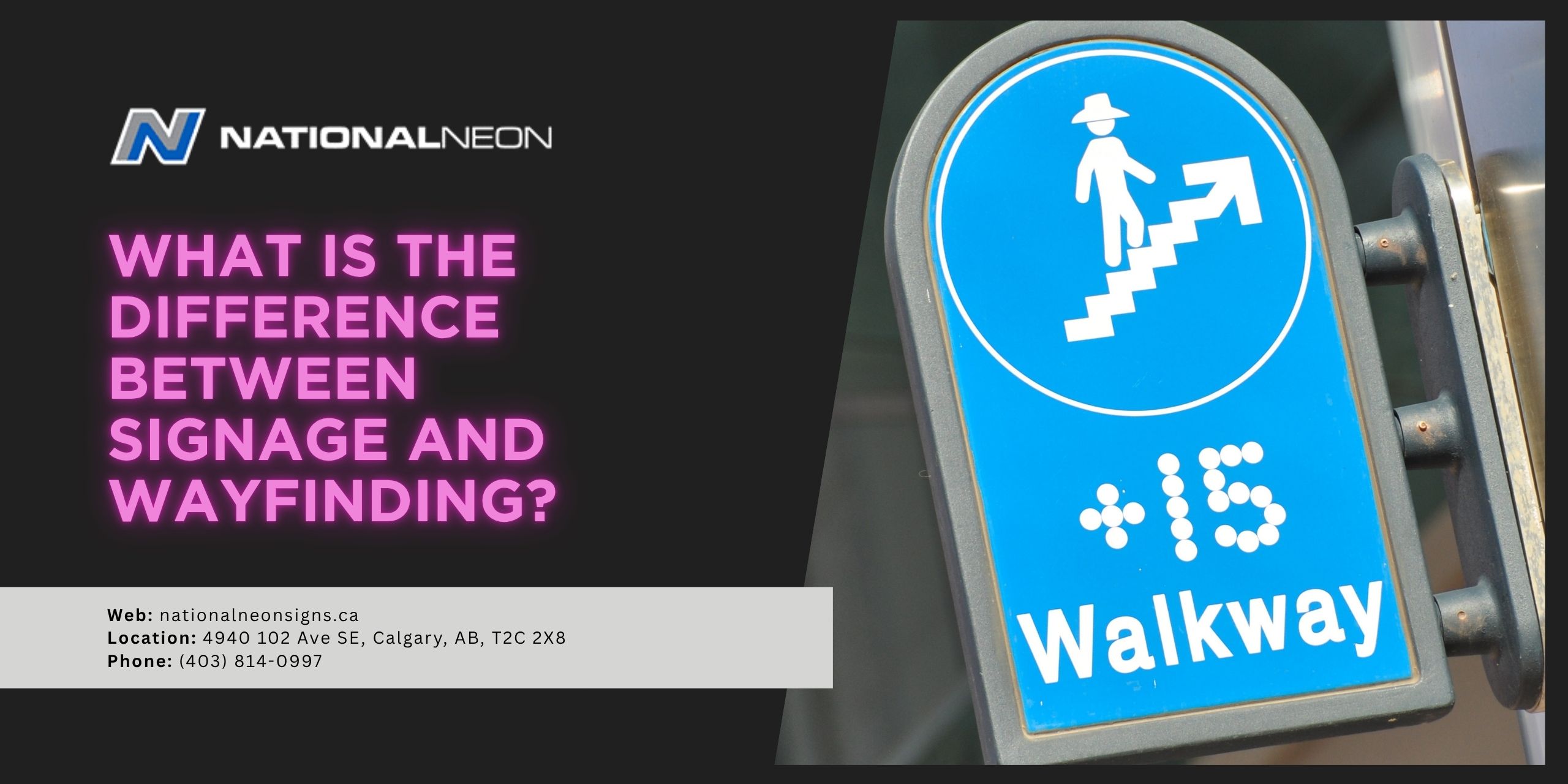
Signage and wayfinding are closely related subjects, but they aren’t the same thing. Signage refers to the actual physical signs that provide information (like arrows, room numbers, or business directories), while wayfinding sign is a broader term that refers to the overall process of orienting yourself within a space.
Many people use these two terms interchangeably; however, there are a few key differences between signage and wayfinding. Understanding the distinction – and how they work together – can help businesses create an environment that is safer, more intuitive, and easier to navigate.
What is signage?
Signage refers to the tangible signs, symbols, and graphics used to communicate information. These signs are one of the primary tools within a larger wayfinding system.
There are four main types of wayfinding signage:
- Identification Signs: Identification signs tell you where you are or confirm that you’ve reached your destination. Example: Room numbers, door plaques, washroom signs
- Directional Signs: Directional signs guide you toward a destination, showing you where you want to go. Directional signs are often found at intersections or key decision points. Example: directional arrows, overhead signs, floor decals
- Informational Signs: Informational signs are used to provide general information about a business or facility. Example: Hours of operation, a general building map, a list of available amenities
- Regulatory Signs: Regulatory signs communicate rules, regulations, restrictions, or other important safety protocols. Example: “Do Not Enter”, “Authorized Personnel Only”, “No Smoking”
The primary goal of signage is to communicate information quickly and effectively. Together, the four types of wayfinding signage work to help guide visitors through an environment.
Additional common signage types (often used alongside wayfinding)
Safety & Emergency Signs
These signs focus specifically on health, safety, and emergency procedures. While often grouped with regulatory signage, they are critical enough to stand on their own.
Digital Signage
Digital signage uses screens to display content that can be updated in real time. Digital signs may function as informational, directional, or promotional signage, depending on the content being shown.
Promotional / Branding Signs
These signs are designed to promote products, services, or brand identity, rather than guide movement.
What is wayfinding?
Wayfinding is the overall system, strategy, and experience of orienting oneself in a space and travelling from one place to another. Wayfinding signs use a series of environmental cues, combined with an individual’s cognitive ability, to create a mental model of an area.
Some key elements of wayfinding include:
- Signage and Maps: Maps, arrows, room labels, directories, and universally recognizable symbols all help guide visitors through a space.
- Contextual Clues: Distinctive features such as unique architectural cues, sculptures, or other prominent landmarks can serve as mental reference points to help users orient themselves, even when signage is limited.
- Colour Coding or Zoning: Colour is a powerful tool for creating intuitive “zones” or routes.
- Lighting: Lighting can highlight paths, mark key destinations, differentiate zones, improve visibility, or create memorable reference points.
- Windows or Outdoor Views: Seeing the outdoors can help people instinctively understand which direction they’re facing, what time of day it might be, or how the building relates to the outside world. Large windows might show distinctive features that can become reference points when navigating.
- Cognitive Mapping: This refers to the mental process of understanding and orienting yourself within a space. Wayfinding is not just about physical signs – it’s about human perception, memory, and spatial reasoning. People naturally form a mental map as they move through space.
The primary goal of wayfinding is to reduce stress and confusion, enabling people to navigate complex areas efficiently. It is the overall experience of moving through a space, understanding it, and making decisions along the way.
What is the difference between signage and wayfinding?
Signage and wayfinding, both made by different signage company Calgary, are closely connected, but they are not the same thing. Signage refers to the physical signs themselves (static posters, plaques, digital screens, decals, arrows, or other graphics), whereas wayfinding refers to the overall system and experience of navigating through a space.
Signage is just one tool in a much larger wayfinding system, which relies on many different elements to help people move through a space.
Understanding the difference between signage and wayfinding can help business owners create a more positive experience for every visitor who walks through the door. For more information or to get started with sign creation, contact us today at National Neon.
