How Much Does It Cost to Make a Sign for a Store
Business Signage, business signs

How Much Does It Cost to Make a Sign for a Store?

If you’re opening a new business or refreshing your current storefront, you’re probably wondering: How much does it cost to make a sign for a store? The answer isn’t always straightforward. Sign pricing can vary widely depending on materials, size, complexity, lighting and installation requirements. 


Understanding the expected costs for your shop sign can help you set a realistic budget and choose the right type for your business. In this guide, we’ll break down the typical price ranges for a storefront sign and what affects its pricing.

What is the average cost of a store sign?

The average cost of a storefront sign can vary significantly, but most fall between $2,000 and $5,000. However, this “average” sits in the middle of a much wider range. Basic, budget-friendly options can cost anywhere from $100 to $1,500, while more advanced or illuminated signs can range from $2,000 to $10,000 or more. 


Here are some rough price ranges for a few common types of storefront signage:


  • Basic Vinyl Banner Sign: around $100 to $500
  • Window Graphics or Decals: around $300 to $2,000
  • Small, Non-Illuminated Sign: around $800 to $4,000
  • Mid-Sized Illuminated Cabinet Sign: around $2,000 to $8,000
  • High-End Illuminated Channel Letters: around $6,000 to $15,000+
  • Large, Freestanding Pylon or Monument Sign: around $8,000 to $100,000+


Keep in mind, these are general guidelines to give an idea of what most businesses can expect, but the final cost of your sign may vary.

What affects the cost of a store sign?

The cost of a store sign depends on various factors, including materials, size, lighting, design complexity, and installation requirements. Let’s take a closer look:


1. Materials


The materials you choose play a major role in both the cost and longevity of your sign. High-quality materials tend to cost more but last longer and look more professional. 


Some options include:


  • Vinyl: affordable and versatile, used for banners and window graphics
  • PVC (Plastic): budget-friendly and lightweight, good for short-medium term use
  • Acrylic: sleek and modern, commonly used for dimensional lettering
  • Aluminum: durable, rust-resistant and ideal for long-term outdoor signage
  • Steel: strong and high-end, typically heavier and more expensive

2. Size


Larger signs require more materials and labour, increasing the overall cost. Many store signs are priced at least partially by square footage.

3. Lighting

Illuminated signs cost more upfront, but offer better visibility, especially at night. 


Some options include:


  • External lighting (spotlighting)
  • Internally illuminated cabinet signs
  • LED channel letters


Lighting can add anywhere from $200 to $5,000+, depending on complexity.

4. Design Complexity


A simple logo and text layout is more affordable than a highly customized design with multiple colours or textures. The more detailed the sign, the more time, materials and labour are required to produce it. 


Some elements that can increase your sign’s complexity (and cost) include:


  • Intricate logos or detailed graphics
  • Custom shapes or non-standard sizes
  • Dimensional lettering
  • Multiple colours or layered designs
  • Special finishes
  • Cut-out elements or negative space designs


Overall, designs with more detail and visual interest may help your sign stand out, but are typically more expensive than a simple, flat layout.

5. Installation Requirements

Installation costs can vary significantly depending on location and difficulty. For example, mounting a small sign on a flat wall might be relatively inexpensive, while installing a large sign at height or with electrical components will require specialized labour and equipment, adding to the cost. 


Some factors that influence installation costs include:


  • Sign Size and Weight: Larger, heavier signs require more labour, equipment and potentially additional structural support.
  • Height and Location: Signs mounted high on a building or over busy streets may require special cranes, lifts, or scaffolding to install.
  • Electrical Work: Illuminated signs need wiring, which may involve licensed electricians or additional inspection fees.
  • Mounting Surface: Uneven, fragile, or irregular surfaces can complicate installation.
  • Permits: Many municipalities require permits or inspections before you can install a storefront sign. 


Investing in a quality store sign is a long-term asset for your business. Working with an experienced sign company ensures your sign attracts customers and enhances your brand for years to come. Contact us at National Neon for more information!
Read More
Big Store Signs | What Are the Big Store Signs Called
Business Signage, business signs

What are the Big Store Signs Called?

Walk through any commercial area, and one thing immediately stands out: big, bold signs on every storefront.  These signs aren’t just for decoration.  They’re designed to capture attention and leave a lasting impression on the viewer.  But what are these big store signs actually called?


There are actually several types of storefront signs, and if you’re designing one for your business, you’ll want to know what kind you’re looking for.  Let’s break down the most common types and see which one might be the best fit for your business.

What are the big store signs called?


A storefront sign is a general term that refers to any sign mounted on the front of a business, typically above the entrance.  These signs display a company’s name or logo and are often the first thing customers notice when they pass by or approach the building.  However, there are several types of storefront signs.  


Let’s take a closer look:


1. Channel Letter Signs


Channel letters are three-dimensional, individually crafted letters mounted on a building’s exterior.  Each letter is its own unit, with a metal body and an acrylic face.  Channel letters are often illuminated with LED lighting, making them highly visible both day and night.  


Channel letters are a popular choice amongst a wide variety of businesses, including:


  • Restaurants and cafes
  • Chain businesses
  • Office buildings and professional services
  • Shopping centres and malls


2. Cabinet Signs


Cabinet signs, or box signs, are large, enclosed sign structures with a durable frame and translucent face that allows light to shine through.  They’re typically illuminated from within, which makes them easy to read both day and night.  While they may not have the same modern, dimensional appeal as channel letter signs, cabinet signs are a more cost-effective option.


Because of their affordability and practicality, cabinet signs are often used by:


  • Small businesses and local shops
  • Restaurants and takeout locations
  • Convenience stores or gas stations
  • Service-based businesses like salons or repair shops


3. Blade Signs


Blade signs, or projecting signs, extend outward from a building, perpendicular to the wall.  These double-sided signs are particularly useful in pedestrian-heavy areas, since they are visible from multiple angles rather than just straight on.  Blade signs are often smaller than other storefront signs, but what they lack in size, they make up for in strong visibility in high foot-traffic areas.


Blade signs are commonly used by businesses in walkable shopping districts or busy downtowns, including:


  • Boutiques or specialty retail shops
  • Cafes, coffee shops, or small restaurants
  • Salons or barber shops
  • Bookstores or gift shops


4. Pylon Signs


Pylon signs, or pole signs, are the tall, freestanding structures you typically see near roads or highways.  They are mounted on one or two poles and are designed to be visible from a distance.  Some pylon signs near shopping centres might display multiple businesses located within the same complex.  


Pylon signs are meant to catch the eye of fast-moving traffic, and are commonly used by:


  • Gas stations and convenience stores
  • Hotels and large commercial properties
  • Retail plazas
  • Fast-food restaurants and drive-thru locations
  • Large retail stores located near busy roadways


5. Monument Signs


Monument signs are freestanding signs, similar to pylon signs, but are shorter and closer to the ground.  They are typically built on a solid base, giving them a more permanent, refined appearance.  Monument signs are often constructed from durable materials like brick, stone, concrete or metal, allowing them to blend with the surrounding architecture.


Monument signs are commonly used by:


  • Office buildings
  • Medical clinics or dental offices
  • Schools, churches, or community centres
  • Residential developments and apartment complexes
  • Upscale retail centres


Are there other types of signs?


Yes, we’ve covered many of the most common storefront options, but there are other types of signage that businesses can use, depending on their needs, including:


  • Digital Signs: Electronic displays that can rotate messages or update content in real time
  • Window Graphics: Vinyl decals or perforated films applied directly to windows
  • Awnings: Fabric or metal coverings that extend over a storefront 


Do I need a permit for a large store sign?

Usually, yes, most cities and municipalities require permits for large store signs.  Requirements typically cover size, placement, lighting and sometimes design. Always check your local area’s regulations before installing any storefront signage.  


Ready to make your vision come to life?  Contact us today at National Neon Signs!

Read More
How Long Do Digital Signs Last? | An Overview by National Neon Signs
business signs

How Long Do Digital Signs Last? | An Overview by National Neon Signs

Digital signage is a huge investment! That’s why you want it to be worth it. That’s why many business owners ask: how long do digital signs last? They aren’t just another expense. The right sign can be a marketing investment that boosts your visibility and ROI for years to come.

Modern digital signs for businesses are built to last. With proper use and care, they can remain bright, reliable and effective for years to come. Today, we will review factors that influence their lifespan ranges and how to maximize the longevity of your signage. Let’s get into it!

Aspects That Affect the Lifespan of Digital Signage

The lifespan of digital signage isn’t determined by one element alone. Each one consists of many moving parts. Here’s what affects the lifespan of your sign:

  • Display Technology: Generally, LED displays last longer than LCD screens. Weather-proof LEDs are super durable.
  • Usage Patterns: A sign running 24/7 will wear out sooner than one used solely during business hours.
  • Environmental Conditions: Outdoor displays have to deal with sunlight, rain, snow, and dust, which further emphasizes the importance of weatherproofing. As a result, indoor displays always last longer.
  • Installation Job: Poor wiring or improper ventilation will naturally shorten a sign’s lifespan. Professional installation makes a huge difference. 
  • Maintenance Practices: Regular cleaning, updates, and timely repairs allow signs to last longer.
  • Manufacturer Quality: Signs made by a reliable and reputed signage maker in Canada offer greater durability, performance, and long-term value.

All of these variables come into play. That’s why it’s important to have realistic expectations when it comes to your signage’s performance. 

The Lifespan of Digital Signs

How many hours is your digital sign going to last? The number of hours a display can function before its brightness starts degrading determines the lifespan of your sign. Here’s an overview of different technologies:

  • LED Displays: These last 50,000-100,000, which roughly translates to 7-10+ years of use. With regular maintenance, high-quality LEDs can last even longer.
  • LCD Screens: The majority of these displays last 30,000-60,000 hours (5-7 years). They’re best suited for indoor use in controlled environments.
  • Outdoor Digital Signs: Designed with tougher, protective casings, outdoor-rated LED signs can last a decade or more with weatherproofing and regular maintenance.

Note that these ranges should only be used as benchmarks. The real-life lifespan is dependent on how and where the sign is used. When a sign is cared for, it naturally lasts longer.

Ways to Make Your Digital Signs Last Longer

Yes, Digital signs have many benefits, and one of them is that they’re designed to last. However, proactive care is essential to add years of reliable use. Follow these best practices:

  • Schedule regular cleanings to remove dust, dirt, and debris that can clog vents or dull brightness
  • Update your software and firmware to prevent glitches and improve performance
  • Ensure proper ventilation and cooling, especially for indoor displays that run continuously
  • Use brightness controls or dimming schedules to prevent unnecessary strain on LEDs
  • Invest in professional installation and preventive maintenance contracts to prevent small issues before they get worse

By following this advice, you can extend the lifespan of your sign. It also ensures your sign looks as great as the day it was installed.

Reasons Digital Signage is Worth the Investment

The upfront costs of digital signage can be intimidating. However, their long lifespan and flexibility make them one of the smartest investments you can make for your business.

Why choose a digital sign? When you do, you get the following benefits:

  • Ability to update messaging instantly without printing costs
  • Display dynamic visuals that capture attention
  • Present a modern, professional image
  • Promote upsells and specials in real time, driving revenue

Digital signs provide a significant ROI (Return on Investment) over their lifetime. Ultimately, the many advantages outweigh the initial purchase and installation costs.


Find the Right Digital Signage for Your Business

How long do digital signs last? Although it comes down to your setup, most provide 5-10 years of reliable use. LED signs are the most durable option. At National Neon Signs, we help Canadian businesses design and install digital signage that looks amazing for years to come. Our goal is to set your business up for long-term success. 

Want to make your business shine bright? Contact us for a quote today!

Read More
Cabinet Signage Innovations: LED Lighting, Customization, and More
business signs

Cabinet Signage Innovations: LED Lighting, Customization, and More

Your storefront sign serves as a beacon for your business, attracting customers and guiding them to your facility. A cabinet sign is a durable, versatile, cost-effective way to advertise your business. By choosing to illuminate your cabinet sign, you can ensure your business is highly visible, even from a distance or at night. In today’s competitive market, it’s more important than ever to set your brand apart. In this post, we’re going to discuss innovations in cabinet signage, including LED lighting, customization, and digitalization.

What is a cabinet sign?

A cabinet sign, also known as a box sign or wall sign, is a box-shaped sign that can be used to display a company’s name, logo, or other message. The frame of the sign is typically made from metal or aluminum and the sign face can be made from a variety of materials, including acrylic, plastic, or metal. Many cabinet signs are illuminated with LED or fluorescent lighting to enhance visibility. Cabinet signs are mounted to a wall or other structure and can be used indoors or outdoors for a wide variety of applications, including:

  • storefront signage
  • menu boards
  • wayfinding signs
  • informational displays

Cabinet Signage Innovations: LED Lighting

You can choose whether or not you want to illuminate your cabinet sign. Non-illuminated signs are a cost-effective option best suited to indoor applications or well-lit areas. However, illuminated signs provide the best visibility, especially if you want your storefront to be seen at night or from a distance.

LED lighting is the most popular choice for illuminated cabinet signs, offering several advantages over other types of lighting, including:

  • Energy Efficiency – LED lights are known for their energy efficiency and use significantly less energy compared to their traditional incandescent or fluorescent counterparts. This leads to significant cost savings on your monthly energy bills. Longevity – LEDs are extremely durable, with some lasting over 100,000 hours! This minimizes your sign’s maintenance requirements and replacement costs.
  • Safety – Most LED lighting is made from epoxy lenses or plastic, not glass, and is shatter resistant. They are cool to the touch, reducing the risk of burns or fires. LED lights do not contain mercury or other toxic substances that can be hazardous to the environment or human health.

You may be able to retrofit your current cabinet sign to LED lighting. This means you can enjoy all the benefits of LEDs without needing to replace your entire sign!

Cabinet Signage Innovations: Customization

Cabinet signs are highly customizable and are available in a wide variety of shapes, sizes, colors, and materials. Because they are so versatile, cabinet signs can be designed to suit your company’s brand. Let’s take a look at some of your options:

  • Shapes – Cabinet signs can be built in a variety of shapes including circles, squares, rectangles, or ovals. They can also be designed into custom shapes.
  • Sizes – You get to decide how large or small you want your sign to be. The best size for a sign will depend on your budget, where the sign will be placed, and the distance that most people will be viewing it. Do you want your sign to be seen by vehicles on a highway? Or pedestrians passing by on the sidewalk?  Ideally, your sign should be large enough to be easily seen, but not so large that it appears unprofessional.
  • Graphics – The face of your sign can be customized with different images, fonts, and colors to suit your company’s branding.
  • Materials – Cabinet signs can be made from a wide variety of materials, including aluminum, acrylic, wood, stainless steel, or PVC. The material you choose might depend on the sign’s location, your budget, and your aesthetic preference.

Cabinet Signage Innovations: Digitalization

In today’s fast-paced world, you only have seconds to grab  the attention of your potential customers. Digital signage can display content such as texts, graphics, or videos to convey your company’s message in an impressive, eye-catching way. Here are a few things a digital cabinet sign can do for your business:

  • Customizable Display – With a digital cabinet sign, you can further customize your display, even allowing you to change your message depending on the time of day or to advertise a specific promotion. Having the flexibility to adapt your sign can make your business more relevant and have a long-term, cost-effective advertising solution.
  • Interactive Content – Digital signage allows you to engage your consumers with interactive content such as entertaining videos or games. This type of content can captivate passersby and give your business a boost.
  • Multi-Purpose – A single digital sign can be programmed for multiple purposes including advertisements, important safety notices, displaying promotions, or entertainment.

Cabinet signs are one of the most popular types of signs for businesses because of their versatility and cost-effectiveness. New, innovative features allow you to captivate your audience more than ever before! To discuss your options, contact us today at National Neon.

Read More
Neon vs. LED Signs
business signs

Neon vs. LED Signs: A Bright Comparison

Your business needs an illuminated sign. Two leading options in the industry are neon and LED signs. What’s the difference and how do you choose the right one? Both neon and LED lighting elements can create a bright, eye-catching display that attracts customers to your business but there are some significant distinctions between the two. Understanding these distinctions will help you choose the best sign for your business. In this post, we’re going to compare neon and LED lights.


Neon Lights

Neon lights are tried and true. They have been used for over a century for signs, advertisements, and other decorative displays. Neon signs are named because they use neon or other gases in a glass tube. When electricity is added, the gases produce a bright, glowing light. Different gases are used to create different colors, and the glass tubing can be bent to form various shapes or designs to promote a particular business or product.

LED Lights

LED lights are considered the wave of the future. LED stands for “light-emitting diode”, which is are tiny string of lights used to create a vivid display. These lights project light in one direction, creating a crisp beam of light available in a wide variety of colors. LED signs are highly customizable and can be used to create attention-grabbing LED digital signs.

Neon Vs. LED Signs: A Bright Comparison

When choosing between neon and LEDs to light your sign, there are many factors to consider, including:

  • Energy Efficiency – LED lights are known for their energy efficiency. Less energy usage leads to lower monthly utility bills.
  • Longevity – LED lighting is incredibly durable, with some lasting up to 100,000 hours. This means your LED sign could last over a decade! Traditional neon lights have a typical lifespan of around 10,000 hours.
  • Initial Cost – Prices will vary depending on the size and style of your sign. Typically, LED signs cost about 10% less than neon signs upfront.
  • Sustainability – LEDs are considered environmentally friendly when compared to other types of lighting, which is important to many of today’s consumers. LED lights use less energy, lowering your company’s carbon footprint, and they last longer, reducing the need for frequent replacements. LEDs are made from non-toxic materials, whereas traditional neon lights may contain toxic substances like mercury, which can be harmful to the environment or human health. LEDs are 100% recyclable, whereas neon lights must be disposed of carefully to avoid contaminating the environment.
  • Maintenance Requirements – LED lighting requires little maintenance. Regular dusting and inspecting the bulbs can help ensure their longevity. Neon signs do require a bit of maintenance, such as checking for cracks and leaks in the tubing and regularly cleaning any accumulated dust or debris. They can withstand cold weather but extreme cold can make neon signs appear faded or off-color. Keeping your neon sign indoors can help protect it from the elements or adding a protective cover can help shield it from rain, snow, or ice.
  • Safety – LED signs are considered safer than traditional neon because they use less voltage and are usually made from materials such as epoxy lenses or plastic instead of glass, making them shatter-resistant. LED lights are cool to the touch and reduce the risk of burns, fires, or electrical shock. On the other hand, traditional neon lights may break easily and may contain harmful substances. However, today’s neon lights usually have protective features to prevent breakage or added safety features compared to neon lights from a century ago.
  • Aesthetics – The whole point of your sign is to look good and attract customers. When it comes to neon vs. LED, personal preference might come into play. LED lights provide a bright, cool light that is highly visible and can be easily seen from a distance. However, the nostalgic quality of neon is very appealing to many of today’s consumers. Traditional neon lights give off a warm, vibrant glow that may be easier on the eyes than LEDs.

When comparing neon vs. LED signs for your business, the right choice depends on your unique needs and personal preferences. Certainly, LED lighting offers several advantages over traditional neon, including the ability to create digital displays. However, many customers are still attracted to a retro neon sign.

For more information, contact us today at National Neon!

Read More
architectural lighting and building accents in modern design
business signs

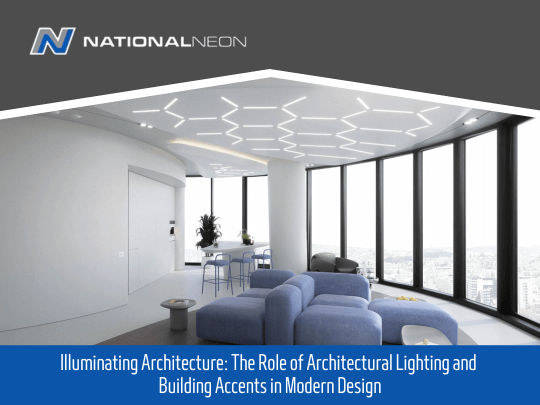
Illuminating Architecture: The Role of Architectural Lighting and Building Accents in Modern Design

Make your building shine in the darkness with architectural lighting and building accents. 

Many people put a lot of thought into the design of their indoor lighting, but outdoor lighting is just as, or maybe even more, important because it’s your business’s first impression on the outside world. 

In a packed city, you need a way for your business to stand out. Some extra lighting and exterior decor can give your building the flair it needs for that extra impact.

People will notice complex lighting designs and building features if they are dynamic enough. The right amount of illumination on the walls allows your business to stand on its own and makes your brand more recognizable.

What role do architectural lighting and building accents play in modern design? It’s time to find out.

What Is the Importance of Architectural Lighting and Building Accents in Modern Design? 

There are several benefits to utilizing architectural lighting and building accents. Here are some ways you can use these methods to your business’s advantage. 

Understanding the Impact of Architectural Lighting

Architectural lighting utilizes light to enhance your building. Strategically placing light fixtures, using various lighting techniques and understanding the interaction between light and space are essential during this process. The goal is to make the building look aesthetically pleasing while getting the attention of potential customers and visitors. Applications make an impact on all types of structures. 

Using Lighting Design to its Full Potential

Lighting design is an art form in its own right. An understanding of architectural features, the desired mood, and the purpose of the space all matter. Lighting designers, such as those from National Neon, take colour temperature, intensity, direction, and control to help the building look aesthetically pleasing. Manipulating light and shadow allows designers to showcase textures, highlight details, and bring the building to life.

Showcasing the Building’s Natural Features

Every building is unique and accent lighting can make each one pop. A well-designed lighting plan can make people remember a building and the area around it. Casting light onto elements such as facades, arches, or columns allows designers to emphasize their form, texture and unique details. The interaction between light and shadow adds depth and dimension to a structure. The lights create a show for anyone walking by.

Emphasizing Ambiance and Mood

Different types of lighting have unique effects on viewers. They can evoke various emotions and shape the mood of a space. Similar to walking into a room, lighting sets a specific ambiance for a space and has an impact on those passing by. For example, soft, warm lighting is calm and relaxing. In contrast, vibrant lighting creates a sense of energy and excitement. The selection and position of each lighting fixture allows architects and designers to make their decor align with the purpose of the space. 

Creating a Sustainable Future Through Technological Innovation

LED lighting is a sustainable light source. It is growing in popularity because of its low energy consumption, long lifespan, and versatility. Sensors and dimmers can adjust the appearance of the lighting levels. It also allows architects and designers to create sustainable lighting displays without compromising on aesthetics of functionality. 

Are you ready to embrace architectural lighting and building accents? Contact National Neon for an estimate today.

Read More
monument signs define corporate and retail spaces
business signs

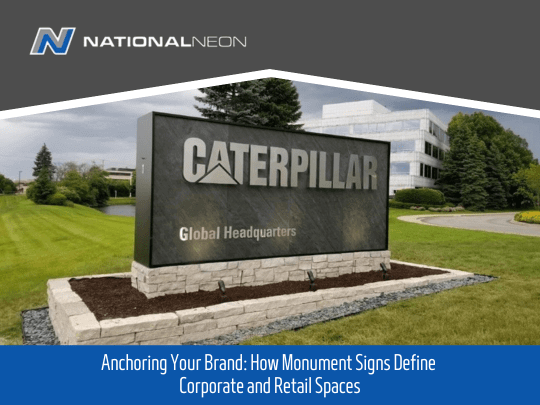
Anchoring Your Brand: How Monument Signs Define Corporate and Retail Spaces

If you’re looking to mark your property or business in a creative way, consider a monument sign.

These large signs stand at eye level and act as a landmark for properties. They come in various shapes and sizes, which allows for large amounts of customization. They can even have slots for multiple tenants. Such business signs are essential to creating and retaining business. In areas with high amounts of traffic, monument signs are your best friends.

Monuments with dynamic designs attract customers and spread brand awareness. Choosing one that suits your needs can help you create a great first impression on customers.

How Can a Monument Sign Help Your Business Succeed?

Signage with a creative design can aid corporate and retail spaces in a major way. Generally, signs are used to advertise products or send a message to customers. Here are some of the ways monument signs help your business thrive. 

Brings In Customers

Those driving or walking are more likely to notice the information on a monument sign because it is at eye level. An outdoor sign with the name of your business and logo can attract the attention of potential customers. The result is more people visiting your business to purchase your products or use your services. 

Multiple Purposes

Monument signs do more than display the name and logo of your business. They can also include elements such as your store hours, phone number and other important information. Essentially, these signs serve as landmarks to showcase the location of your business and bring in more customers. A memorable sign is a great way to get and retain customers. 

Creative Design Elements

Monument signage can utilize brick, natural stone, concrete, iron or other forms of metal into its design. It can allow your business to choose its own style. Whether your company prefers a sleek, modern look or a rustic, classic look, a monument sign has you covered. You can incorporate logos, emblems, or graphics into the design to maintain brand consistency and add a personal touch.  

Acting as Directions

Putting a monument at the entrance to your property will help visitors find their way to your business. If your building is not visible from the road, utilizing a monument sign is an effective way to direct people to your business. Customers being able to find their way to your store creates higher sales. That’s part of the reason public places use these signs so often. 

Saves You Money

A custom monument sign resists harsh weather conditions and can last for several years. They are made to last and made from high-quality, weather-resistant materials such as stone, stainless steel, or plastic. Utilizing these signs saves you the extra amounts of money you would spend on billboards. Several options are also available, even if you have to stick to a budget.

Monument signage allows you to incorporate your ideas and spread brand awareness, translating into more sales. Are you ready to experience the benefits of a monument sign? Contact National Neon today.

Read More