

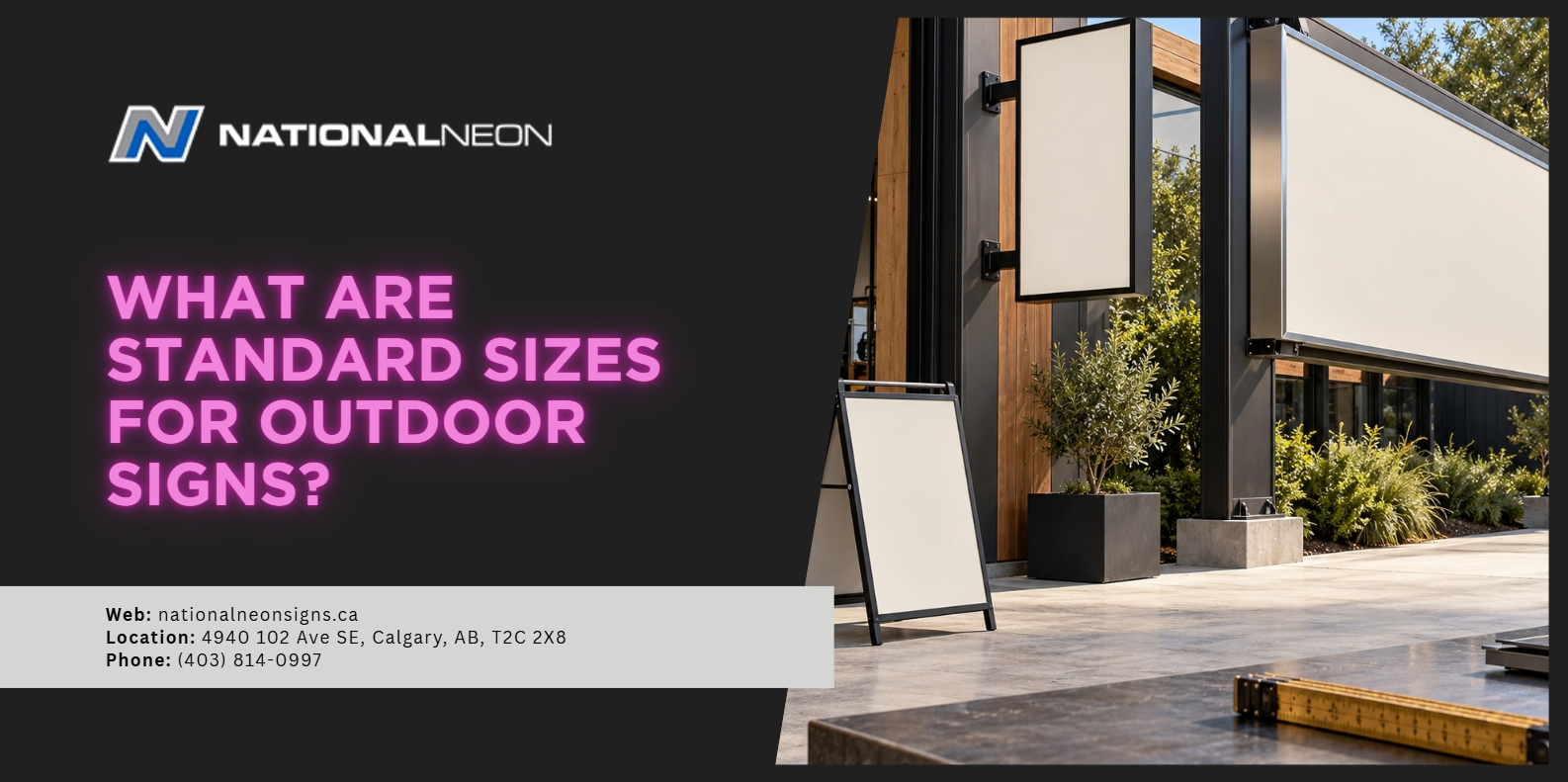
You want a new outdoor sign, but you’re probably wondering how big it should be. A small sign is easy to overlook. Meanwhile, going big might look too crowded or break local rules.
Basically, there isn’t a one-size-fits-all option for outdoor signs, but there is a right size. That depends on the type of sign, your building and where it’s going. Let’s dive into how sizing works for the most common types of outdoor signs so you can think about it before you decide.
What Are Standard Sizes for Outdoor Signs?
Buildings and locations are different. Sign sizes are generally made to fit the space and viewing distance, not simply a fixed measurement. Here’s a quick breakdown:
Storefront Signs
A storefront sign should fit the space above your entrance. Balance is key. It should suit the width of your storefront and the height of the wall above your door, with enough breathing room around it. Both illuminated channel letters and cabinet signs are sized this way.
Projecting Blade Signs
A projecting blade sign is compact by design. When people are walking by, they will be looking at it up close so the sign doesn’t have to be big. Plus, it tends to be limited by how far the sign can extend from the building and by local laws.
Freestanding Signs
Freestanding signs vary the most in size. A pylon sign is tall so drivers can see it from the road. Meanwhile, a monument sign will sit lower to the ground, making it wider than tall. The right size depends on the distance the sign is from the road, the speed of traffic and what the property allows.
Wayfinding Signs
People need to be able to read wayfinding signs. That’s why they are sized based on their purpose. For example, larger text is better for drivers who need to read it quickly compared to pedestrians who can take their time. On more complex properties, getting the size right matters.
What Affects the Size of an Outdoor Sign?
Sign size is determined by a few factors. Those include:
- Viewing Distance: When people are looking at your sign from afar, text and graphics need to be larger.
- Traffic Speed: Drivers don’t have as much time to read compared to pedestrians. That’s why signs along busy roads should be larger and simpler.
- Building and Space: The sign should suit your building. That means considering available wall space, the height of your storefront, and the size of your property.
- Sign Type and Lighting: Depending on the type of sign you choose, proportions are different. For example, illuminated signs need to be sized for the lighting to look even.
- Local Regulations: In most areas, sign size, height and placement are limited.
- Budget: Larger signs often cost more to build and install, which is why size and budget go hand in hand.
Are There Size Restrictions for Outdoor Signs?
Most cities and municipalities have restrictions on signs that cover how large a sign can be, how high it can go, where it can be placed and how it can be lit. Rules vary based on the location, usually depending on zoning and the type of sign. Sometimes, you may need a permit.
Check your local requirements before falling in love with a design. Understanding these rules ahead of time can help you avoid disappointment if your sign isn’t approved.
Need Help Choosing the Right Sign Size?
The right sign size can mean multiple things. It’s about getting your sign noticed, fitting your building, your location and your budget. At National Neon Signs, we work with you throughout the process. Count on us to be there from fabrication to installation.
Trying to find the right size for your business? Contact us to get started.
