

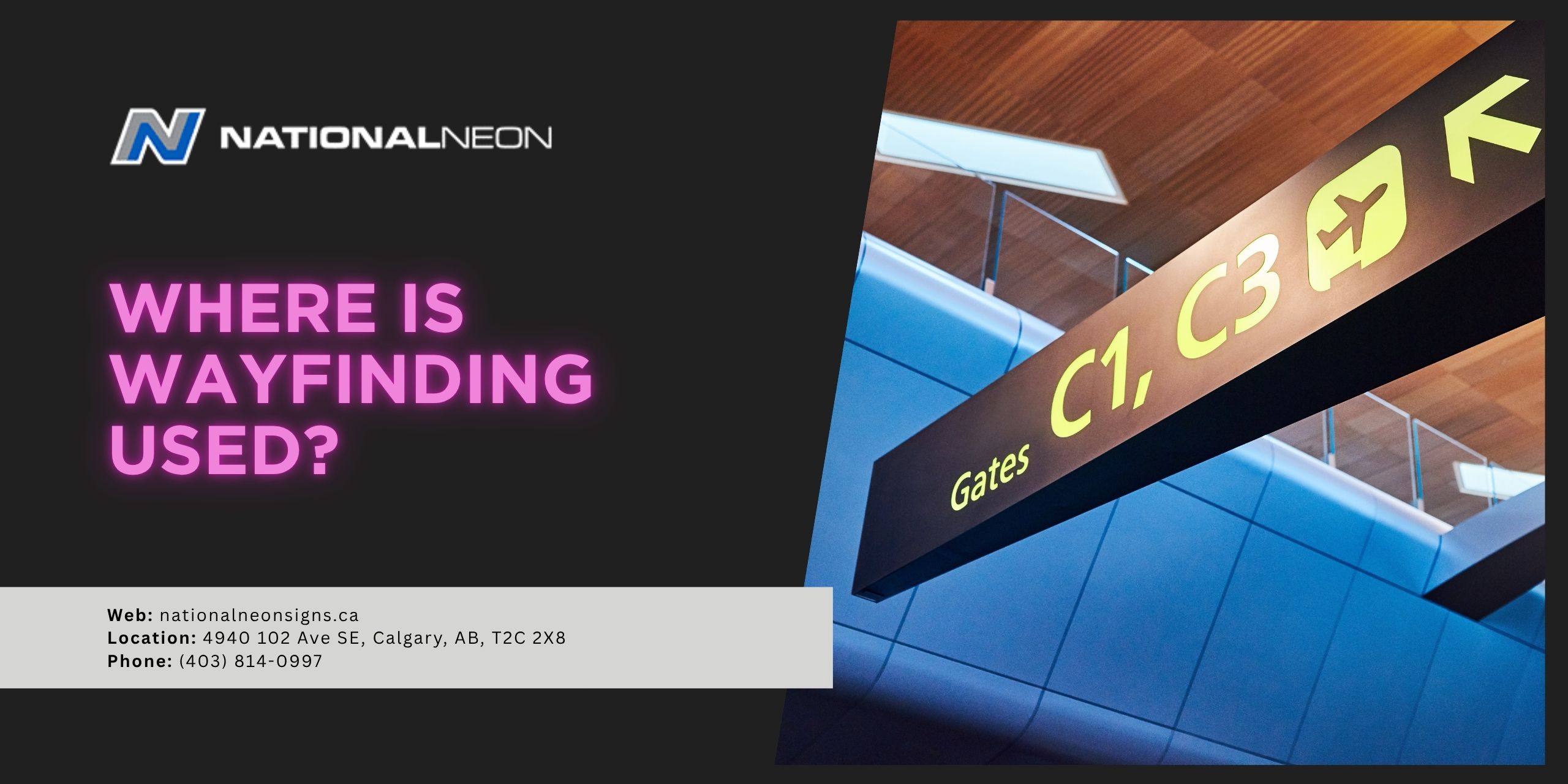
Wayfinding is all around us, even if we don’t notice it right away. Every sign that tells you where to go or where you are is part of a larger navigational system designed to help people move confidently through a space.
Wayfinding signage is a common tool used to help people find their way. But what exactly is wayfinding signage, and where is it used? Why is it so essential? Let’s take a closer look.
What is wayfinding signage?
Wayfinding signage is a system of signs, symbols, and visual cues designed to help guide people through an unfamiliar space. Its main goal is to let visitors know:
- Where they are
- Where they want to go
- What’s around them
- Where to avoid going
Effective wayfinding signage should be clear, visible, easy to read, and universally understood. By helping visitors find their way quickly and easily through a space, wayfinding signage leads to a more positive overall experience.
Where is wayfinding used?
Wayfinding is commonly used anywhere people need clear guidance to navigate a space, particularly in complex, unfamiliar, large, or busy environments, such as:
1. Transportation Hubs
Airports, train stations, and bus terminals would be nearly impossible to navigate without effective wayfinding systems. Here, signage helps travellers:
- Understand arrival and departure information
- Locate terminals, gates, or platforms
- Find security checkpoints, washrooms, or exits
- Move efficiently through a busy, time-sensitive environment
2. Healthcare Buildings
Hospitals and medical clinics often feature several specialized departments within the same building or sometimes multiple buildings. Wayfinding helps patients and visitors locate:
- Emergency areas
- Specific wards, departments, or clinics
- Offices
- Parking areas
- Amenities, such as the cafeteria, waiting area, gift shop, or washrooms
3. Educational Institutions
Clear wayfinding signage makes a university or college campus feel more welcoming and manageable, especially for new students or staff. Wayfinding within a large school system or across a campus helps visitors:
- Locate classrooms, libraries, labs, or other school buildings
- Find amenities like food courts, study spaces, or washrooms
- Find recreation spaces like gyms, fitness centres, sports fields, or performance venues
4. Commercial and Retail Spaces
Wayfinding in retail spaces, from shopping malls and big-box stores to supermarkets, benefits both customers and business owners: When shoppers can find what they’re looking for, they spend more and leave with a more positive experience. Wayfinding in commercial buildings helps customers find:
- Specific departments or aisles
- Store directories
- Checkout lanes
- Customer service
- Washrooms
5. Entertainment Venues
Wayfinding is essential in many entertainment and leisure venues, including:
- Movie theatres
- Casinos
- Museums and galleries
- Theme parks
- Stadiums and arenas
- Zoos and aquariums
- Recreation centres
6. Hotels and Hospitality
Wayfinding in hotels or resorts helps guests navigate spaces that are often large, multi-levelled, or filled with amenities. Travellers might need help finding:
- Elevators, stairwells, or hallways
- Guest rooms
- Guest facilities, including pools, fitness centres, spas, restaurants, or gift shops
- Meeting or event spaces
- Emergency exits
7. Business and Corporate Offices
Wayfinding signage is widely used throughout hotels, hospitals, businesses and corporate offices to help employees, clients, and visitors navigate the workplace quickly and confidently. Here are the most common places you’ll find wayfinding signage in office buildings:
- Building entrances and lobbies
- Reception areas
- Hallways and corridors
- Conference rooms and meeting spaces
- Elevators and stairwells
- Parking lots and parkades
Why does wayfinding matter?
Wayfinding – and the signage that supports it – matters because it:
- Reduces Stress and Confusion: Visiting a complex or unfamiliar environment can be stressful, especially if you’re under a time constraint. Wayfinding eliminates the frustration of getting lost, helping people feel calmer and more confident.
- Enhances Safety: Wayfinding plays a critical role in safety, especially during emergencies, by clearly identifying fire exits, evacuation routes, or first aid locations. Regulatory signs guide visitors away from restricted zones or hazardous areas.
- Improves Operational Efficiency: Clear signage reduces the need for staff to spend time giving directions, allowing them to focus on their primary tasks. When customers and employees can find their way on their own, the entire environment runs more smoothly.
Wayfinding signage helps people move through a space confidently and efficiently, creating a more positive user experience. For more information, contact us today at one of the most trusted sign makers in Canada, National Neon.
