A Deep Dive into Neon Signs' History
Business Signage

Neon Signs: A Deep Dive into History, Craftsmanship, and Modern Applications

Neon signs have been around for over a century, with the invention of these signs credited to French engineer Georges Claude.  Claude’s invention involved passing an electrical current through rarefied neon gas in a sealed glass tube, causing it to emit a bright, glowing light.  His first public demonstration occurred in late 1910.

The first known use of a neon sign in advertising was in 1912 at a Parisian barber shop, where the words “Palais Coiffeur” were displayed.  This marked the debut of a new phenomenon – since then, businesses have been eager to capture the attention of their consumers with these vibrant, illuminated signs.  

Today, custom neon signs have become iconic symbols of nightlife in bustling cityscapes and the fun and frivolity of entertainment.  Over the decades, the popularity of neon has fluctuated, especially with the advent of cheaper, more energy-efficient alternatives like LEDs and fluorescent lighting.  However, many consumers still find themselves attracted to the warm, nostalgic glow of a classic neon sign, and it’s safe to say that their popularity is making a comeback.  

In this article, we’re going to take a deep dive into the history of neon signs, taking a closer look at their craftsmanship and modern applications.


Evolution of Neon Signs

1910s

After his discovery, Georges Claude first unveiled his invention at the Paris Motor Show in December 1910.  After demonstrating its potential for advertising, he would later patent his system, including a specific design for the electrodes within the tubes and methods for purifying the neon gas, enabling the creation of bright, long-lasting neon lights.  This patent formed the basis for his company, Claude Neon Lights.  

1920s to 1950s

Often referred to as “liquid fire”, neon signs became widely popular worldwide during the 1920s and 1930s, particularly in large, urban centers.  This period became known as the “golden age of neon.”  The rapid growth of cities and the increased availability of electricity provided the perfect circumstances for neon signs to flourish.  Neon signs became a powerful tool for advertising, creating vibrant, memorable displays in iconic locations such as Las Vegas and New York City.  These displays came to symbolize progress, modernity, and the possibilities of the electronic age.

The popularity of neon signs lasted well into the 1950s.  During this time, neon lighting technology saw significant improvements, including the introduction of more colors and greater design flexibility.  While neon itself produces a reddish-orange glow, adding other gases like argon and mercury, and using fluorescent coatings applied to the inside of the glass tubes, allowed for the creation of other colors such as blue, yellow, green, purple, and white.  Advances in glass and electrode technology led to more durable and reliable neon signs, reducing breakage and maintenance issues.  Improved materials and the ability to create a wide range of colors allowed for more detailed, complex signs than ever.

1960s

However, neon signs became less popular in the 1960s due to a combination of factors.  By this point, neon signs were no longer a novelty – what was once considered the peak of modernity began to be perceived by some as outdated or even tacky.  Neon signs were fragile and expensive to manufacture and repair.  The 1960s saw the rise of more affordable and more durable illuminated signs, most notably the advent of LED (light-emitting diode) lighting.  LED signs were cheaper, easier to install and maintain, and lasted longer than traditional neon.  Finally, the glass used in many neon signs contained lead, which raised health concerns, particularly as safety regulations began to tighten in the 1960s.  

1980s

Neon experienced a brief revival in the 1980s – a decade known for its bright colors, extreme fashions, and iconic trends.  Popular TV shows of the day, such as Miami Vice, contributed to its resurgence.  The show prominently featured neon lights in various settings, including nightclubs, buildings, and even clothing, creating a vibrant and stylish atmosphere, adopting neon once again as a symbol of luxury and entertainment.

2010s to 2020s

Today, neon is making a comeback.  The resurgence is partly driven by nostalgia and the desire to recapture the retro, vibrant aesthetic of decades past, particularly the 1980s and 1990s.  Today’s fast-paced world can be overwhelming and overstimulating, whereas a vintage neon sign feels warm and inviting, bringing us back to a simpler time.  Younger people, too, are embracing neon as a fresh, bold visual statement.  Their eye-catching, photogenic quality makes them popular on social media, allowing users to capture their alluring retro charm in the modern age.  

Neon Sign Craftsmanship: How Neon Signs are Made

Traditional neon signs are made of sealed glass tubes, filled with neon and other gases.  The tubes are bent and twisted to form letters, symbols, or other designs.  When electricity is added, the neon emits light, causing the sign to glow.  The art of neon sign glass tube bending is a specialized skill that requires precision and experience.  Today, it is considered an endangered craft.  

Let’s briefly discuss how neon signs are made:

  • Design – A pattern for the neon sign is created, which is used as a reference during the glass-bending process.
  • Heating the Glass – Skilled artisans use various burners to heat and soften the glass tubes so they become malleable.
  • Bending the Glass – The heated glass tube is gently bent, using the pattern, to achieve the desired shape.
  • Adding Electrodes – The tubing is capped with electrodes, which are the connection point for the electricity source that powers the sign.
  • Gas Filling – Impurities are removed from the glass before carefully introducing the appropriate gas (typically neon or argon).
  • Completion – The ends of the tubes are sealed, and the sign is ready to be installed!

Today’s Neon Signs 

How do today’s neon signs differ?

Today, modern neon signs are more affordable, more versatile, and safer than ever.  In particular, LED neon offers an alternative to traditional neon signs, using light-emitting diodes housed within flexible, plastic tubing to mimic the appearance of classic neon, without the use of fragile glass or hazardous gases.  

Here are a few key differences between today’s neon signs and those of yesteryear:

  • Materials – Traditional neon signs use hand-bent glass tubes filled with inert gases like neon or argon.  Modern LED neon signs use flexible silicone or acrylic tubing instead of glass, so they are shatter-resistant, free from harmful substances, and are not hot to the touch.
  • Energy Consumption – Traditional neon signs consume significantly more energy than modern neon signs, which are designed with energy-saving components.  LED neon is more eco-friendly and can help save costs on monthly utility bills.
  • Initial Cost – Traditional neon signs are typically more expensive to purchase and install.  LED neon is generally more cost-effective, especially when you factor in long-term energy and maintenance costs.
  • Durability – With proper maintenance, both traditional and modern neon signs can last a long time.  However, traditional neon signs, made with glass tubes, are more susceptible to breakage.  LED neon signs use durable, low-voltage LEDs encased in flexible materials, making them more resilient to physical damage and weather conditions.  

What are some modern applications of neon signs?

Modern neon signs can be used in a variety of ways, extending beyond traditional advertising to include interior design, art installations, and event decor.  These eye-catching displays are often used to create a unique atmosphere and add a personalized touch to both residential and commercial spaces.  

Here’s a more detailed look at some of their modern applications:

  • Home Decor – Neon signs are used to add a focal point to living spaces, contributing to the mood or aesthetic of the room.
  • Office Decor – Neon signs can be used to inspire creativity or add a unique touch to workspaces.
  • Event Decor – Neon signs add personality and a retro touch to weddings, parties, or other special occasions.
  • Social Media Engagement – Neon signs are powerful tools for boosting social media engagement.  They help create visually appealing backdrops for photos and videos, encouraging user-generated content, and driving traffic to your online presence.
  • Artistic Installations – Neon signs are increasingly used as art installations in galleries and other public spaces.
  • Unique Gifts – Custom neon signs make unique and personalized gifts for various occasions.
  • Wayfinding – Neon signs can be used for navigation, creating a visually appealing and effective way to guide people through complex environments such as airports, hospitals, or retail stores.
  • Indoor Signage – Neon signs can help set the mood and add a unique decorative element in a variety of settings, including restaurants, cafes, salons, or other shops.
  • Enhanced Branding – Businesses can use neon signs in their brand colors to display their name, logos, or other slogans, creating a memorable experience for customers.
  • Advertising – Of course, neon signs are still used for advertising purposes.  Their bright, warm glow can make a business stand out, especially after dark.

There’s no doubt that neon has continued to stand the test of time.  Today, many people find the warm, nostalgic glow of a classic neon sign.  National Neon provides a wide range of signage options, including neon signs and digital LED displays.  To order your sign, contact us today!
Read More
Art of Neon Sign Glass Tube Bending
Business Signage

Art of Neon Sign Glass Tube Bending: Craftsmanship at Its Best

Bright, glowing neon signs have become iconic displays of commerce and entertainment: a colorful cityscape fueled by neon signifies the possibilities of the electronic age.  Neon signs have been used in storefront displays and advertisements for more than a century; however, glass tube bending is often considered an endangered craft.  

The art of neon sign glass tube bending is a specialized craft that demands both precision and strict safety measures. Skilled artisans use heat and manual techniques to shape glass tubes into custom designs and lighting effects. The process involves heating specific sections of the tubing until they become pliable, then carefully bending them to form letters, symbols, or other shapes. Once the design is complete, the tubes are filled with inert gases—such as neon or argon—which produce the iconic glow when an electrical current passes through.

Glass tube bending requires skill, precision, and experience. In this article, we’re going to take a detailed look at the art of neon sign glass tube bending process: craftsmanship at its best.

1. Design and Planning

A design or pattern for the neon sign is created and printed to scale on a fire-resistant sheet, which serves as a reference used to guide the bending process. This can be done either manually or with the help of computer software.

2. Heating the Glass

Skilled artisans use various burners to heat and soften the glass tubes so they become malleable. Typically, a ribbon burner using propane is used to heat specific sections of the glass tube, softening it to a pliable state.  The temperature is high, around 1200°F or 650°C, until the glass reaches a state where it can be bent, twisted, and shaped into various designs.

3. Bending the Glass

The heated glass tube is then gently bent, following the pattern, to achieve the desired shape.  A blow hose or other tools might be used to control the diameter of the glass as it’s bent.  During this process, the bends are meticulously checked and adjusted against the pattern to ensure their accuracy and precision.  Once the desired shape is achieved, any excess glass is carefully cut off with a glass cutter or similar tool.  When necessary, separate glass sections are heated and fused together.

4. Adding Electrodes

Once the tubing is shaped, it is capped with electrodes.  These electrodes are the connection point for the electricity source that powers the neon sign.  Each separate tube that makes up the sign requires these connection points.

5. Bombarding

Bombarding is a technique used to remove impurities from the glass.  A strong electrical current is passed through a vacuum-sealed glass tube, heating it and its electrodes, causing the impurities and other contaminants to be released and then pumped away.  This process ensures a clean environment for the neon or other gases, resulting in a brighter, longer-lasting neon sign.  

6. Gas Filling

The appropriate gas (typically neon or argon) is carefully introduced into the vacuum-sealed tube to the desired pressure.  The tubing itself is sometimes coated inside with a powder called phosphor, which gives the tube a different color when lit, depending on which gas it is filled with.  Occasionally, parts of the tubes that are not meant to be seen are “blocked out” or painted to further define the shape of the neon sign.

7. Sealing

The ends of the tubing are sealed using a heat torch or other sealant to prevent gas leakage.  This step requires precision to ensure a tight seal.  It’s crucial to perform a leak test after sealing. 

8. Completion

The tubing is complete and ready to be mounted!  It’s generally recommended to have a professional install your neon sign.  Neon signs can be fragile and require careful handling during installation.  A qualified electrician can ensure the sign is installed securely and safely.

Neon signs are regaining popularity, with many consumers finding themselves attracted to their warm, nostalgic glow.  However, glass tube bending is considered an endangered craft, requiring years of training and experience.  Due to the handcrafted nature of the process, each neon sign is unique.  Today, modern neon signs are safer and more affordable than ever.  

Whatever type of sign you want, National Neon can help –  from the initial design to the final installation.  Contact us today for more information!

Read More
Monument Signs: Blending Tradition with Modern Branding
Business Signage

Monument Signs: Blending Tradition with Modern Branding

It’s time to go back to basics! That’s right—even today, monument signs can still make an impact. If you’re a local business looking to stand out in your community, this is the way to go. These ground level signs are often anchored in stone, brick, metal or high-density foam and can still make your place of business shine.

Are you a school, medical office, retail plaza, church or corporate campus. No matter what type of business you are, a monument sign can work for you. Let’s learn about how a monument sign can showcase your brand.

Monument Signs Explained

A monument sign is a freestanding, low profile sign that sits by a building’s entrance or along a roadway. In contrast to their pylon and pole counterparts, they are closer to the ground and tend to be between three and six feet tall. This makes it more grounded and readable from a distance. 

They tend to be made of the following materials:

  • Stone or brick masonry
  • Concrete
  • Metal panels
  • Stucco or acrylic
  • Routed or sandblasted foam (for cost-effective replicas)
  • Digital LED panels (for modern messaging)

Monument signs are classic and never go out of style. Even in our modern world, they still hold relevance. We will discuss why they still matter now next.

How Monument Signs Hold Up Today

When everyone is looking down at their phones, they might not notice a sign. However, that’s where you’d be wrong. These signs sit at eye-level. Check out some of the reasons businesses still turn to monument signs:

  • Builds Credibility: A professionally designed monument says a lot about your business. It shows you are established, permanent and proud of your brand.
  • Anchor Your Brand: Temporary and digital ads come and go, but monument signs are forever. Think of it like a landmark that customers will remember.
  • Fuses Retro and Modern Influences: Even monument signs can use backlit logos, digital displays and QR codes. The material the display sits on combines tradition with trust.

From past to present, monument signs get the job done. They truly are unforgettable. We will learn about how to effectively design a monument sign next.

Designing the Perfect Monument Sign

Wondering how to make your monument sign a staple of your neighbourhood? Well, there are few ways to stand out even in streets filled with signs. Try out the following;

  • Match Architecture: Your sign should complement your building and surrounding landscape. A cohesive theme helps build trust.
  • Simple Messaging: All you need on your sign is your business name, logo and an optional tagline. Keep digital messages short and readable.
  • Make Everything Legible: Fonts, colours, contrast and lighting should be chosen with visibility in mind. This is especially true for drive-by traffic.
  • Think Long-Term: Durable materials and timeless designs should be your top priorities. If you maintain it, your monument sign can last 20+ years.

Whether you have a monument sign or not, design is everything. After all, you’re putting out an image of your brand to the world. It should represent you and your business.

Let Legacy Meet Longevity With a Monument Sign!

Sometimes, it’s a good thing to go back to classics—monument signs prove it! They can showcase your brand and message if you use them correctly. Need help with your monument sign? You can count on National Neon Signs. We are your sign design and installation experts.

Ready to experience the benefits of monument signs? Contact us today! 

Read More
Signage Placement and Visibility
Business Signage

Signage Placement and Visibility: Picking the Perfect Spot

A well-designed store sign is one of your business’s most important tools for attracting customers, promoting products, or enhancing brand recognition.  However, signage placement is just as important as design.  Even the most compelling, visually appealing sign won’t help much if your customers can’t see it!  To ensure maximum visibility, you’ll need to consider the environment around you.  

Picking the perfect spot can significantly impact its success.  In this post, we’re going to explore some key factors that contribute to effective signage placement.  

1. Foot Traffic

The strategic placement of signage in high-traffic areas significantly amplifies its visibility.  Your sign should be placed where it is most likely to be seen by your target audience, which is why you need to prioritize locations that receive high foot traffic.  This might include areas like sidewalks, entryways, checkout lines, or other places where people tend to stop and gather.  By identifying high-traffic areas, businesses can ensure that their signage reaches a larger and more diverse audience, increasing brand exposure and capturing the attention of potential customers.  

2. Signage Height

For signs targeting foot traffic, place your sign at eye level.  This ensures your message meets the gaze of passersby, making it both highly visible and engaging.  However, if your sign is on a busy street with a lot of pedestrian traffic, you may want to consider placing it slightly above eye level, or higher if it needs to be seen from a distance.  For busy locations, you may want to angle the sign 45 degrees up or down from eye level and check if this makes it more visible.

3. Accessibility

Your sign needs to be easily accessible to the audience you want to reach.  Make sure it’s placed in a clear line of sight, where it is unobstructed by other signs, objects, or the surrounding environment.  Ensure your sign is in clear view and can be easily read and understood by passersby.  

4. Environmental Surroundings

The surrounding environment can have a big impact on the effectiveness of your sign.  Consider your sign’s surroundings, including any visual clutter or other signs that might be next to yours.  Your sign should stand out even in a busy environment, with clear design elements and contrasting colors.  Consider natural elements like trees, plant growth, or weather conditions that might affect visibility and factor these in when choosing the perfect spot for your sign.  Choose a location that complements your sign’s message and visual style.

5. Local Regulations

When placing your sign, it’s important to adhere to local ordinances and regulations.  This includes checking zoning laws, permit requirements, and any restrictions on sign placement.  Adhering to these guidelines helps prevent any legal issues in the future.  Make sure your sign is installed securely and safely to prevent accidents and avoid damage.

6. Vehicle Traffic

When placing outdoor signs, consider vehicle traffic, including the speed of traffic and the distance from where it will be seen.  For traffic moving at higher speeds, your sign will need to be larger, with a clear, concise message so drivers can quickly understand the information.   Signs need to be positioned and designed to be easily seen against the backdrop of other environmental surroundings.  Pylon signs, also known as freestanding signs, are often used along busy roads and highways.  They are strategically placed to be seen from a distance and are often double-sided so that they catch attention from both directions.

Finding the perfect spot for your sign has a huge impact on its overall success.  Ready to discuss how our signs can elevate your brand visibility and attract more customers to your store?  Contact us today at National Neon!

Read More
Creative Design Ideas for Eye-Catching Cabinet Signs
Business Signage

Creative Design Ideas for Eye-Catching Cabinet Signs

Cabinet signs are known for their ability to help businesses stand out! They also offer a plethora of possibilities for customization. With that in mind, there are several ways to use them to increase visibility, attract customers, and enhance branding. After all, a well-designed sign is the best way to stand out, especially in busy areas.

With that  in mind, let’s discuss design ideas that will make your cabinet sign pop! Here’s some more information about cabinet signs and what a unique design can do for your business.

What Design Elements Make a Cabinet Sign Stand Out?

Cabinet signs are special and offer a unique box-shaped sign. This frame allows them to shine, but there are a couple other elements to keep in mind. We break them down below:

  • Typography: Font can say a lot about a brand in the sense that it offers a sense of personality. A sign’s text can deliver important messaging like slogans and promotions. The text should be easy to read and be bold in nature.
  • Colour Scheme: If you want people to notice your brand, you should use a signature colour scheme. There should also be a sense of contrast to make your image stand out. Try using a light colour against a dark background.
  • Lighting Effects: Cabinet signs tend to have a bulky frame that allows them to stand out in the crowd and using lighting the right way can emphasize this. Backlit and halo effects are ideal for businesses that remain open after the sun goes down.
  • Logo Use: When you think of a major brand, one of the first things that comes to mind is a logo. By incorporating yours into your sign, you are establishing your brand as a driving force in your community.

What Creative Cabinet Sign Ideas Can Inspire Your Needs?

When designing your new sign, you need to keep your message in mind. However, on a busy street, you need to stand out. How do you do this—a unique design concept of course! Check out some ideas below:

  • Minimalist Designs: You’ve probably heard the saying, “less is more.” This is all too true when it comes to cabinet signs. Using negative space and clean lines will make your design look clean and free of clutter.
  • Bold and Bright Colours: The eye is naturally drawn to bright colours. If you opt for bright reds, oranges, and yellows, people won’t just stop and stare—they might just stop into your business.
  • Graphic Elements and Icons: A picture is worth 1,000 words. By using pictures and graphics on your sign, people understand what your business is all about. For example, food on restaurant signs and shopping carts for retail stores are visually appealing.
  • Vintage or Retro Style: You’ve probably seen those old movies with those neon motel signs. They look amazing and are timeless. Additionally, the vintage or classic feel can evoke a sense of nostalgia, attracting potential customers.
  • Interactive Elements: Color changing pictures, graphics, and lettering are very unique. These displays are dynamic rather than stagnant. Businesses wanting to showcase offers, news, and time-sensitive promotions can benefit from these. 

How Can You Customize Your Cabinet Sign to Suit Your Business’s Needs?

Alongside design elements, there are other ways to customize your cabinet sign. This allows you to make your sign your own. Take the following into consideration:

  • Size and Shape: Cabinet signs are usually box-shaped, but can you alter them to fit your space. Unique shapes are ideal for smaller spaces. Speaking of size, you can scale your sign up or down depending on your needs. 
  • Materials: Choose from acrylic, aluminum or polycarbonate. Acrylic has a glossy finish that’s easy to customize. Its counterparts are super durable and ideal for outdoor use because of their weather-resistant properties. 
  • Dual-Sided Designs: When people are walking down the street or driving by, you might worry about them missing your sign. However, you can make them see it by making your side double-sided, which is a great way to get your message out there.
  • Using Local Elements: Take pride in your community and market yourself as a local business. Using nearby landmarks and destinations as images on your sign will make your business more recognizable to locals.

Get Creative with a Brand New Cabinet Sign Today!

By incorporating these unique design elements into your sign, you can stand out in the crowd. After all, customization makes a difference. If you’re on the hunt for a brand new cabinet sign, National Neon Signs has you covered. We offer quality signage solutions that ensure no one will forget your brand.

Are you ready to give your sign an upgrade? Contact us today!

Read More
Illuminated Cabinet Sign
Business Signage

Illuminated vs. Non-Illuminated Cabinet Signs: Choosing the Right Fit

Illuminated or non-illuminated? When it comes to cabinet signs, is there any way you can go wrong? Well, these box-shaped signs are a surefire way to make your business stand out from the inside out. The addition of lighting can make your brand’s message, logo, or graphic stand out, but sometimes, it isn’t always necessary.

If you find yourself facing this dilemma, we’re here to solve your problem. Let’s compare and contrast illuminated and non-illuminated cabinet signs to help you make the right decision for your business.

Benefits of Illuminated Cabinet Signs 

Illuminated cabinet signs are box-shaped signs with additional lighting designed to showcase texts and images. LED lights are the most common way to make these signs pop. What are the benefits of illuminated cabinet signs? Find out below:

  • Increased Visibility: If you put an illuminated cabinet sign outside your business, can you attract foot traffic and catch the attention of those driving by.
  • 24/7 Branding: When the sun goes down, your business might start feeling invisible. Because of this, illuminating your sign might make sense to be visible all the time.
  • Modern Appeal: Technology is constantly changing and so are signs. By lighting up your cabinet sign, you can stand out in a city of outdated signs.
  • Various Lighting Options: Backlighting, front-lighting, halo effects and other options offer endless possibilities.

Advantages of Non-Illuminated Cabinet Signs

Sometimes, you can’t go wrong with the classics and simple is better. Non-illuminated cabinet signs display text and images without any additional bells and whistles. If you’re considering this option, think about what is has to offer:

  • Affordability: Not only do cabinet signs cost less to install, but they also don’t use electricity, which saves you money on your utility bills.
  • Simple Elegance: If you prefer a minimalist or classic appearance, a non-illuminated cabinet sign just makes sense. It showcases your business and nothing else.
  • Durable and Low Maintenance: Without any electrical components, there is less to maintain. Because of this, you don’t have to worry about replacement for a while.
  • Energy Efficiency: If your business is in a crowded, well-lit area, you don’t need to light up your sign. You don’t have to deal with a hefty electrical bill either.

Comparing Illuminated and Non-Illuminated Cabinet Signs

Although they’re both cabinet signs, illuminated and non-illuminated signs have some key differences. By understanding these distinctions, you can make an informed decision for your businesses. 

  • Visibility: Illuminated signs work well in dark environments or areas with low foot traffic, while non-illuminated signs are better suited for areas with adequate lighting or where visibility isn’t an issue.
  • Price: Illuminated signs have higher installation and maintenance costs than their counterparts that don’t have ongoing energy bills.
  • Energy Efficiency: The difference is fairly obvious—non-illuminated signs don’t use any electricity while illuminated signs require constant power to operate.
  • Maintenance Requirements: In terms of illuminated signs, they require periodic maintenance such as light replacement and electrical wiring. Non-illuminated require minimal maintenance. 

Illuminated or Non-Illuminated Cabinet Signs?

So which is better? Illuminated signs are great for low-light conditions and use LED lighting to showcase your brand’s message. However, they require a decent amount of maintenance and can increase your electricity bills. In contrast, non-illuminated signs look simple, and are fairly low maintenance, but they won’t stand out in the dark. At National Neon Signs, we understand finding the right signage can be a challenge and we’re here to help.

While the correct answer comes down to your business’s needs, contact us to learn more about cabinet signs!

Read More
Choosing the Right Materials for Your Cabinet Sign
Business Signage

Comprehensive Guide to Cabinet Signs: Design, Materials, and Installation

Table of Contents:

  1. Introduction to Cabinet Signs: What Are They and Why Choose Them?

    • Brief overview of cabinet signs and why they’re important for business visibility.

  2. Designing Your Cabinet Sign: Key Elements to Consider

    • Typography, color schemes, logo incorporation, and layout options.

    • Importance of readability and brand alignment.

    • Customization options like size, shape, and lighting effects.

  3. Choosing the Right Materials for Your Cabinet Sign

    • Overview of commonly used materials like acrylic, aluminum, and polycarbonate.

    • How to choose materials based on location (indoor vs. outdoor).

  4. Understanding the Cabinet Sign Installation Process

    • Professional vs. DIY installation.

    • Breakdown of the installation process from consultation to final checks.

  5. Maintaining Your Cabinet Sign for Longevity

    • Regular maintenance tips to keep your sign in prime condition.

    • Cleaning, checking wiring, and other key upkeep tasks.

  6. Why Cabinet Signs Are a Worthwhile Investment for Your Business

    • The long-term benefits of choosing cabinet signs for your brand visibility.

Cabinet signs are a great way to make your business stand out in the crowd, especially if you’re located in a busy area. In a bustling, illuminated and non-illuminated signs like these ones can make a huge difference. With their box-like frame (or cabinet), they are known for their ability to house lights and other elements like logos, texts, and graphics. However, that might leave you wondering, “What can a cabinet sign do for me?” 

If you find yourself asking this question, we’re here to help. In our comprehensive guide, we will break down cabinet signs, their design elements, materials and installation process. Here' s everything you need to know about cabinet signs!

Elements of a Successful Cabinet Sign

The most important elements of a cabinet sign are their ability to act as a branding tool and make your business more visible. However, there are other aspects to take into account, including day and night visibility. Without further ado, let’s review what makes a cabinet sign so great.

Design Basics

When designing a cabinet sign for your business, you need to make something that represents you and what you do. Don’t forget about the following elements:

  • Typography: The front should be readable while matching your brand’s style whether that be modern, traditional, or bold.
  • Colour Scheme: If your brand uses a certain colour palette, use it to your advantage. However, you should remember that contrasting colours work best (i.e. light text on a dark background).
  • Logo Incorporation: The logo should stand out, but not overwhelm the viewer. Remember to be subtle yet memorable.

Customization Options

Feel free to customize your cabinet sign until your heart’s content. However, it’s important to not go too out there. Consider the following:

  • Size: Depending on where you put your sign, you can make it larger or smaller.
  • Shape: Custom-cut signs can be adapted to fit in a certain spot and fit your brand.
  • Layout: Choose between single and double sided designs.
  • Lighting Effects: Halo lighting and backlit letters offer additional visibility.
  • Materials: Choose a durable material and compare different ones before making a choice.

Finding Durable Cabinet Sign Materials

Like with any sign, your cabinet sign should be built to last. That’s one of the reasons choosing the right materials is essential. There’s nothing worse than a sign deteriorating before it has the chance to showcase your brand. Let’s break down different materials and which ones you should use where.

Commonly Used Materials

Every material has its own set of strengths and weaknesses. Cabinet signs use a couple common materials, including:

  • Acrylic: Lightweight, durable and easily customizable, this vibrant material works well on front faces. However, its glossy finish makes it prone to scratches.
  • Aluminum: This solid metal is tough, rust-resistant and thrives in the great outdoors. The only downside is high upfront costs.
  • Polycarbonate: Known to take a beating, this material is less prone to damage. Unfortunately, it tends to be on the pricier side.

Picking a Material Based on Location

Cabinet signs can thrive indoors and outdoors. As a result, you have to choose your material based on where you’re going to put the sign. Here’s a brief explanation:

  • Indoor: When your cabinet sign is inside your building, you don’t have to worry about damage. Acrylic and PVC (polyvinyl chloride) signs work best and can save you money.
  • Outdoor: When you’re displaying a sign outside for maximum visibility, it should be weather-proof. That’s when the investment in aluminium and polycarbonate signs are worth it.

Understanding the Cabinet Sign Installation Process

Installing a cabinet sign can be a hassle if you aren’t experienced. However, it’s not impossible. Despite this, deciding between professional and DIY installation and understanding the process are both essential. Then, once you get your sign installed, you have to maintain it. Let’s discuss the cabinet sign installation process.

Professional vs. DIY Installation

Should you pay extra for a professional installer to put up your cabinet sign? Of course you should! Below we dive into the risk of DIY installation and positive aspects of professional installation:

  • DIY Risks: While DIY installation can save you money, there are too many risks for it to be worth it. Unsafe signs, additional repairs and non-compliance with local regulations are a few things to watch out for.
  • Professional Installation: When you ask a professional to install your cabinet sign, you reap the benefits. It ensures your sign is secure, complies with building codes, and is properly wired for longevity.

Installation Process

The cabinet sign installation process isn’t as simple as you might think. There are several steps involved in installing this unique signage. We break it down for you below:

  • Initial Consultation: First, you will meet with a signage expert to determine the sign’s location, lighting, and design.
  • Measurements: A technician will measure the space where the sign is going to be installed, including the height and width.
  • Mounting: Depending on your sign’s design, it will be mounted on a wall, post or another structure.
  • Electrical Connections: If you decide to illuminate your sign, an electrician will set up the lighting. 
  • Compliance: Next, the technician reviews local zoning laws, building and electrical does to determine that your sign complies.
  • Permits: If your sign is outdoors, it likely needs a permit. If this is the case, you will need to get one before lighting up your sign.
  • Final Checks: After your sign is up and all the appropriate paperwork is filled out, your technician will ensure the sign is level, illuminated, and has no wiring issues. 

Maintenance Tips

Cabinet signs are fairly easy to maintain. In fact, it’s one of the reasons so many businesses gravitate towards them in the first place. Follow our maintenance tips to keep your sign shining bright for years to come:

  • Check Wiring Regularly: If you notice your sign is starting to dull, check the wiring. If the wires are wearing out, call in a licensed technician to get your sign repaired.
  • Clean Surfaces: Over time, dust buildup can begin to block your sign’s light. Clean your sign on a regular basis to prevent this issue, especially if it's outdoors, exposed to the elements.

Invest in a Cabinet Sign Today!

Cabinet signs are cost-effective, versatile, and highly visible. What business wouldn’t want one? As long as you take care of it, use the right materials, and get the necessary repairs, it will last for years to come. If you’re on the hunt for a good cabinet sign, National Neon Signs can help you find what you’re looking for. 

Ready to make your business shine with cabinet signs? Contact us today to get a quote!

Read More
Channel Letter Signage Permits and Regulations Navigating the Legal Landscape
Business Signage

Channel Letter Signage Permits and Regulations: Navigating the Legal Landscape

When it comes to installing channel letter signage, you should always ensure your sign complies with local signage regulations and legal requirements. Channel letter signage permits help your business meet the necessary standards, which allows your sign to be installed legally without complications. This guide will help you understand the signage permit application process, local zoning laws for signage, and the steps to ensure your sign is compliant.

Understanding Channel Letter Signage Permits

Channel letter signage permits are required by local municipalities before businesses can install certain types of signs—this includes channel letter signs. These permits ensure that the sign complies with local zoning laws for signage, addresses aesthetic guidelines, and adheres to safety and visibility standards. Permits prevent your sign from obstructing views and is appropriately sized.

The permit requirements vary based on your location as well as the size and type of signage, lighting, and the exact placement. Understanding regulations might seem daunting. However knowing about the requirements and being prepared makes a huge difference.

Sign Permit Application Process

The process of applying for a sign permit for businesses typically involves several essential steps:

  • Consult Local Authorities:Start by contacting the local zoning office or city hall to understand the regulations that apply to illuminated and non-illuminated channel letters in your area. These guidelines ensure that both lit and unlit signage complies with local requirements, helping businesses make informed decisions about their signage options.
  • Submit Necessary Documentation: This usually includes detailed drawings of the sign, specifications for lighting (if applicable), and a site plan showing the sign’s proposed location.
  • Wait for Approval: The review process can take anywhere from a few days to several weeks, depending on the complexity of the sign and the local authority’s procedures.
  • Install Upon Approval: After your permit is approved, you can begin installation, ensuring that all guidelines are followed to maintain compliance with the permit’s terms.

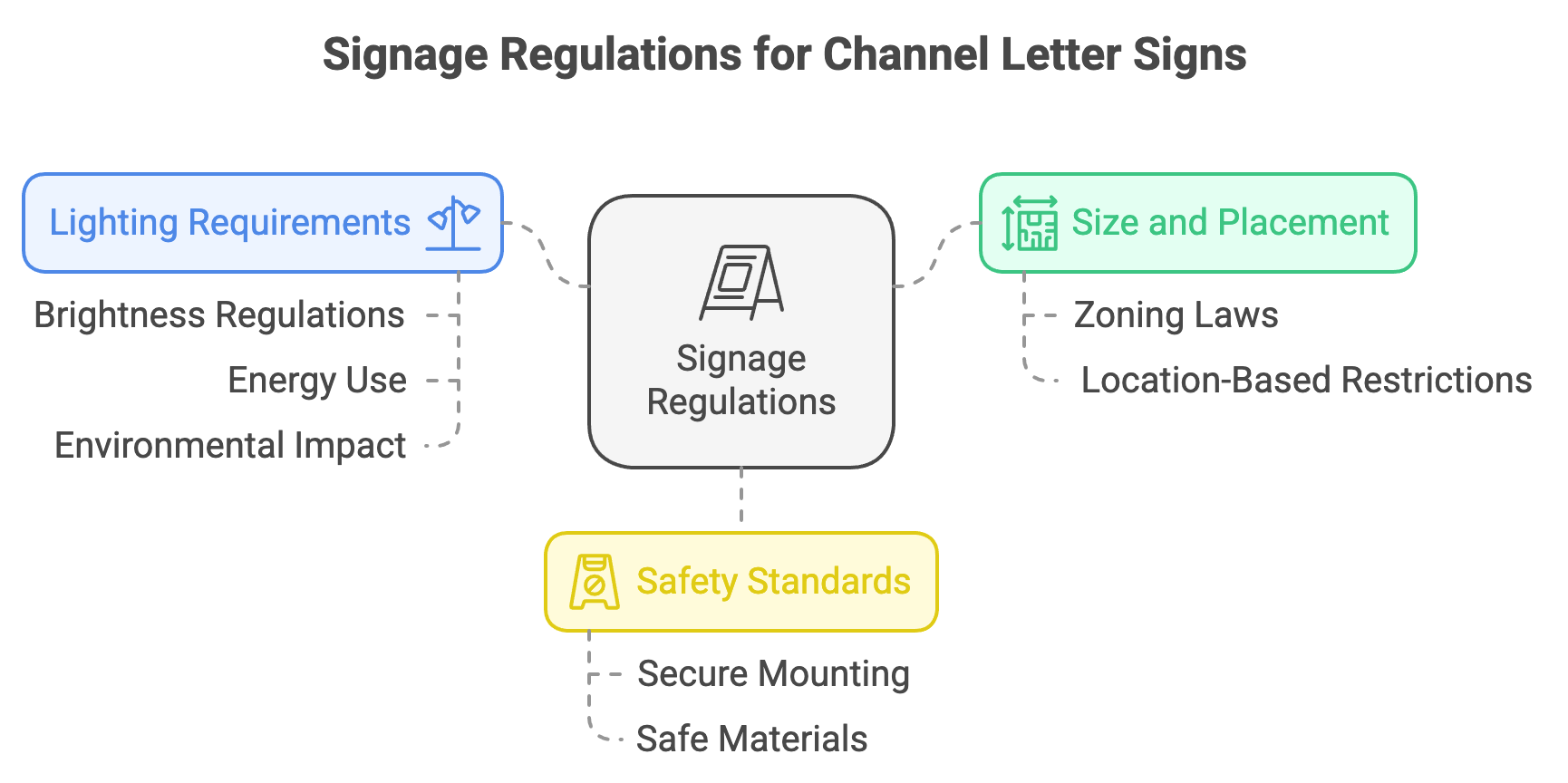
Common Signage Regulations to Keep in Mind

Ensure your channel letter sign complies with local standards by being aware of some common signage regulations:

Common Signage Regulations to Keep in Mind

  • Size and Placement: Zoning laws usually restrict the height and width of signs based on your property’s location. Signs that are too large or poorly positioned can obstruct views or violate local law.
  • Lighting Requirements:If your channel letter signage is illuminated, you must meet specific regulations regarding brightness, energy use, and environmental impact. Many businesses opt for LED channel letters because of their energy efficiency, long lifespan, and compliance with industry standards. These illuminated signs not only enhance visibility but also reduce maintenance costs, making them a smart and sustainable choice.
  • Safety Standards: Signs cannot pose hazards to pedestrians or vehicles. For instance, channel letter signs must be securely mounted and made from materials that won’t easily break or cause injury.

Why Compliance with Signage Permits is Important

Complying with signage regulations and obtaining the proper channel letter signage permits is beneficial for the following reasons:

  • Legal Protection: Compliance protects your business from fines, penalties, or having to remove the sign entirely. Local authorities enforce these regulations to maintain public safety and aesthetic consistency.
  • Enhanced Visibility: Compliant signs are designed for visibility while respecting the neighborhood’s aesthetic. Following the rules ensures that your sign will be both effective and legally sound.
  • Positive Brand Image:Businesses that invest in well-regulated signage, such as digital LED signage, demonstrate a commitment to quality, professionalism, and respect for their community.

Get Your Channel Letter Sign Permits with National Neon

Navigating channel letter signage permits and signage regulations doesn’t have to be complicated. At National Neon Signs, we specialize in creating high-quality channel letter signs that not only meet but exceed regulatory standards. Contact us Today!

Read More
Seasonal Signage to Attract Customers
Business Signage

Using Seasonal Signage to Attract Customers Year-Round

The right sign allows businesses to attract and engage customers. Seasonal signage allows companies to capitalize on the changing seasons and holidays throughout the year. From festive decorations to promotional offers, seasonal signage can help companies stand out and attract customers year-round.

Many seasonal signs are available, including interior and exterior signs. Whether you require them for seasonal decor or the holiday season, the right sign can make a difference. Let’s learn about what a seasonal sign can do for you.

Benefits of Seasonal Signage

Seasonal signage offers a plethora of advantages for businesses looking to attract customers year-round. Understanding these benefits can help companies to leverage these custom signs effectively as part of their marketing strategy. Here are some key points to consider:

  • Increased Visibility and Attention: Seasonal signage captures passersby’s attention and draws them to your business. A festive banner or even a seasonal window display creates visual interest and intrigues customers to explore further.
  • Enhanced Customer Engagement and Brand Awareness: Seasonal signage lets businesses engage with customers by tapping into the emotions and sentiments associated with specific seasons or holidays. Aligning your signage with the themes and aesthetics of the season creates a sense of connection with your target audience, increasing brand awareness and affinity. Utilizing Canada’s digital signage and LED signs can further enhance this strategy, allowing for dynamic updates and vibrant displays that capture the festive spirit effectively. These technologies offer the flexibility to easily adapt and resonate with seasonal trends, making your business stand out and stay relevant.
  • Opportunity to Tap into Seasonal Trends and Holidays: Each season brings its own trends, holidays, and cultural events. Seasonal signage allows companies to capitalize on these opportunities by promoting relevant products, services, or promotions that align with the season. Seasonal signage enables businesses to stay relevant throughout the year, whether it’s summer sales, back-to-school specials, or holiday promotions. Utilizing sign companies in Calgary can further enhance these efforts by providing expertly designed and manufactured signs that capture the essence of each season, ensuring your business effectively attracts and engages customers all year round.

Types of Seasonal Signs

When it’s time to pick a seasonal sign, businesses have various options to suit their needs and budget. Here are some of the most popular types of seasonal signage:

  • Outdoor Banners and Flags: Large, eye-catching banners are displayed outside your storefront to attract attention and promote seasonal offers or events. These signs are visible from a distance and can help bring in foot traffic.
  • Window Displays and Decals: Window displays effectively showcase seasonal themes, products, or promotions to customers passing by your storefront. Decals and window clings can be easily applied and removed, allowing for flexibility in updating seasonal messaging.
  • A-Frame Signs and Sidewalk Chalkboards: A-frame signs and sidewalk chalkboards can be placed on sidewalks or near entrances to advertise seasonal specials or events. These signs are highly visible and can attract the attention of pedestrians walking by.
  • Digital Signage and LED Displays: Digital signage and LED displays offer dynamic and interactive options for seasonal advertising. These signs can be easily updated with seasonal messaging, graphics, and animations to capture attention and engage customers. Similarly, neon signs can add a vibrant and nostalgic element to your seasonal decor, complementing your digital displays with their unique glow and drawing even more eyes to your promotions. This blend of modern and classic signage solutions effectively enhances your store’s visual appeal and customer engagement.

Tips for Creating Effective Seasonal Signage

Creating effective seasonal signage requires careful planning and execution to ensure your messages resonate with your target audience and drive desired actions. Here are some tips to help you create compelling and impactful seasonal signage campaigns:

  • Keep it Relevant: Tailor your seasonal signage to suit the interests and needs of your target audience and the specific season or holiday you’re promoting. Consider how your products or services can add value to customers during that time while highlighting these benefits.
  • Incorporate Eye-Catching Visuals and Colors: Use bold colours, engaging graphics, and compelling imagery to capture attention and create a memorable impression. Seasonal themes and motifs can evoke the season’s spirit and generate excitement and anticipation.
  • Promote Seasonal Offers or Specials: Highlight seasonal promotions, discounts, or limited-time offers in your signage to incentivize customers to take action. Use clear and concise messaging to communicate the value proposition and encourage immediate engagement.
  • Ensure Consistency with Your Brand Identity: Embracing seasonal themes and aesthetics is important, but maintaining consistency with your brand identity also matters. Ensure that your seasonal signage aligns with your brand’s tone, voice, and visual style to maintain brand recognition and credibility. Incorporating Vinyl Decals Canada into your seasonal signage can be an effective way to achieve this. Vinyl lettering allows for customized, brand-consistent typography and color schemes that enhance your seasonal displays while ensuring they remain true to your overall brand identity.

Best Practices for Implementing Seasonal Signs

Implementing seasonal signage campaigns requires careful planning and execution to ensure maximum effectiveness. Here are some best practices to consider when implementing seasonal signage:

  • Plan Ahead: Plan your seasonal signage campaigns well in advance to allow time for creative development, production, and installation. Consider seasonal trends, holidays, and events relevant to your target audience and plan your signage accordingly.
  • Monitor and Track Effectiveness: Implement tracking mechanisms to monitor the effectiveness of your seasonal signage campaigns. This could include tracking foot traffic, sales conversions, or customer feedback. Use this data to evaluate the success of your campaigns and make adjustments as needed.
  • Adapt and Adjust: Be flexible and willing to adapt your signage strategy based on customer feedback and market trends. If a particular campaign isn’t resonating with your audience, feel free to make changes or try something new. Use the insights from monitoring and tracking to refine your approach and improve future campaigns.

By following these guidelines and best practices, you can create impactful seasonal signage campaigns that capture attention, drive engagement, and, ultimately, increase sales. National Neon Signs has you covered if you’re looking for the perfect seasonal sign. Contact us today to learn more!

Further related pages:

Toronto signage company

Signage company Vancouver

Signage Company Edmonton

Read More
Why Choose Neon Signs
Business Signage

Why Choose Neon Signs for Your Business

Are you looking for a way to give your business an eye-catching and unique look? If so, add some personality to your business with neon signs. 

Neon signs have been around for many years and are still one of the most popular choices for businesses looking for an eye-catching advertising method. Neon signs are very visible, even from a distance, and can be seen day or night. Not only do they add a touch of nostalgia, but they also help to create an atmosphere that is unique and memorable.  

If you’re thinking about using neon signs for your business, here are some things to keep in mind.

5 Benefits of Investing in Neon Signs

Attract Potential & New Customers

A business’s neon sign is often one of the first things that a potential customer will notice. In many cases, it is the sign that will determine whether or not they will stop in to check out what the business has to offer. A well-designed neon sign or digital LED sign can be an extremely effective marketing tool, capable of attracting new customers and helping to boost sales.

Even small businesses can benefit from investing in a high-quality neon sign. By making a small investment in this powerful marketing tool, businesses can see a significant return in the form of increased foot traffic and higher sales.

Very Visible and Lights Up the Night

As night falls, the city comes alive with a dazzling display of neon lights and digital signage Canada options. Neon signs are created by electrically charging glass tubes filled with neon gas. When turned on, the gas glows brightly, producing a striking and eye-catching effect. Neon signs quickly became popular for businesses looking to attract attention and boost sales.

In addition, these are popular for a reason: they are highly visible, even in direct sunlight. This is because these signs use bright, fluorescent colors that are easy to see from a distance. 

Create an Inviting Atmosphere for Customers

There’s something about a neon sign that just screams, “Come on in!” Maybe it’s the bright colors or the retro appeal, but there’s no doubt that a well-designed neon sign can help to attract customers and create an inviting atmosphere. 

They can also be used to highlight special features of your business, such as your hours of operation or unique products and services.

Versatile and Highly Customizable

Neon signs are one of the most versatile and customizable forms of advertising and branding available. Unlike many other forms of signage, neon signs can be made in almost any color and shape imaginable. This flexibility is similar to custom vinyl lettering, making both options ideal for businesses that want to create unique, eye-catching signs that truly stand out.

Neon signs can also be used to great effect indoors or outdoors, making them a very versatile form of advertising. And because they are so durable, they can last for many years with proper care and maintenance. 

Energy Efficient 

Though they may seem like a relic of the past, neon signs are actually very energy efficient. Modern neon signs use less than 5% of the electricity of an incandescent bulb to produce the same amount of light. This is because neon lights produce light differently than other bulbs. 

They contain a gas ionized by an electric current, which produces a bright glow. This process is very efficient, and it means that neon signs can last for years with minimal upkeep. 

Whether you’re looking for a subtle way to add some extra flair or you want to make a bold statement, neon signs are an effective option.

Read More