Digital signage is a powerful tool for businesses. Vibrant, dynamic displays attract more attention than static signs, creating a more engaging experience for your customers and ultimately leading to increased sales.
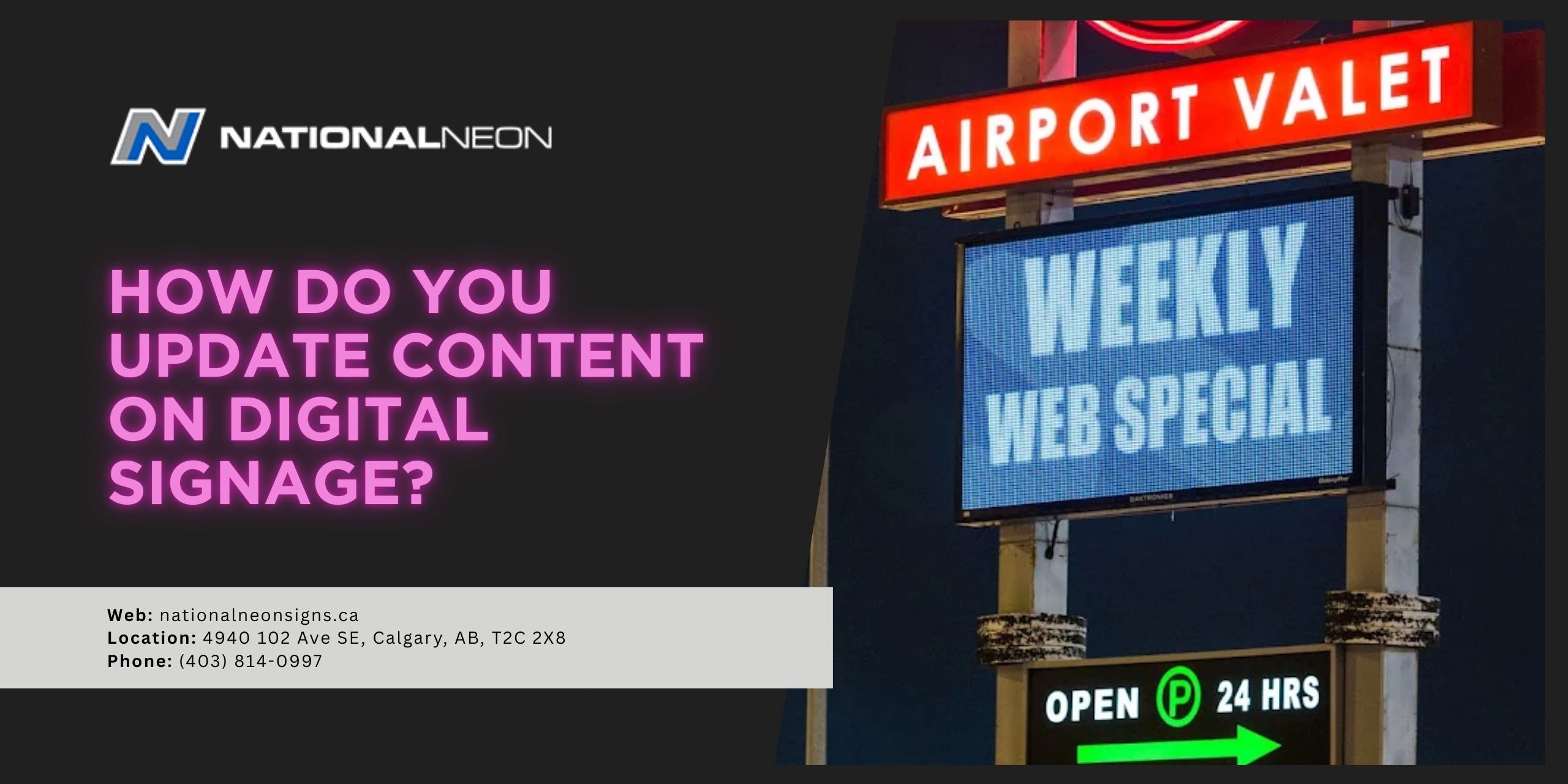
By placing digital signage outdoors, businesses can take advantage of high-traffic areas to increase their visibility and brand awareness. Most modern outdoor displays are durable and long-lasting, designed to withstand the elements. Investing in a high-quality outdoor digital sign by a trusted sign company in Calgary is crucial for long-term reliability and visual performance. In this post, we’ll examine some key considerations for outdoor digital signage.
Can Digital Signage Be Used Outdoors?
Yes, digital signage can be used outdoors, but it requires specialized, weatherproof enclosures. These displays are designed to withstand rain, dust, direct sunlight, and extreme temperature fluctuations. Outdoor digital signage features high brightness for visibility, anti-glare technology, temperature-management systems, and durable, shatter-resistant enclosures to protect the display from harsh conditions and vandalism.
Let’s take a closer look at the key features of outdoor digital signage:
- Weatherproof Enclosures: Outdoor digital displays use a sealed, weatherproof enclosure with a high IP rating (IP65 or higher) to protect against dust, water, and other environmental elements.
- High Brightness and Visibility: Outdoor screens are engineered with high-brightness technology (often over 2,500 nits) to ensure content is visible and legible, even in direct sunlight. Some smart displays automatically adjust their brightness based on ambient light conditions, optimizing visibility and energy efficiency.
- Temperature Control: Outdoor digital signage requires built-in heating and cooling systems to prevent the screen from overheating or freezing, as this can damage the display. Ventilation fans, heaters, or air conditioning units allow the sign to operate at optimal temperatures and ensure year-round operation.
- Durability: digital signages last a long time as they are made with durable, UV-resistant materials, including shatter-resistant glass and protective coatings to safeguard the screens from physical damage and prolonged sun exposure.
- Anti-Glare: Anti-glare technology ensures content is clear and readable, without reflections, which is essential for outdoor environments.
- Security Features: Many outdoor displays utilize features like tamper-resistant hardware and security enclosures to deter vandalism and theft.
- Professional Installation and Maintenance: Always have a professional install your outdoor digital display. Professionals know how to handle critical aspects of installation, ensuring safety and preventing damage. Routine inspections and maintenance will keep your display in top condition.
What Are the Benefits of Outdoor Digital Signage?
Virtually any business can benefit from an outdoor digital sign. Some benefits include:
- Enhanced Visibility: Bright, high-resolution displays capture attention and stand out in busy outdoor environments.
- Dynamic Content: Digital signs can display videos, animations, and other engaging content, which is more effective than traditional static signs.
- Real-Time Updates: Businesses and organizations can quickly update their signage to deliver real-time messaging, including current promotions, announcements, or safety information.
- Brand Awareness: Outdoor digital signage provides powerful opportunities for businesses to enhance their brand visibility and reach customers effectively.
When you choose National Neon Signs, you can benefit from one of the most powerful digital marketing tools on the market. Contact us to discuss whether outdoor digital signage is the right option for your business!